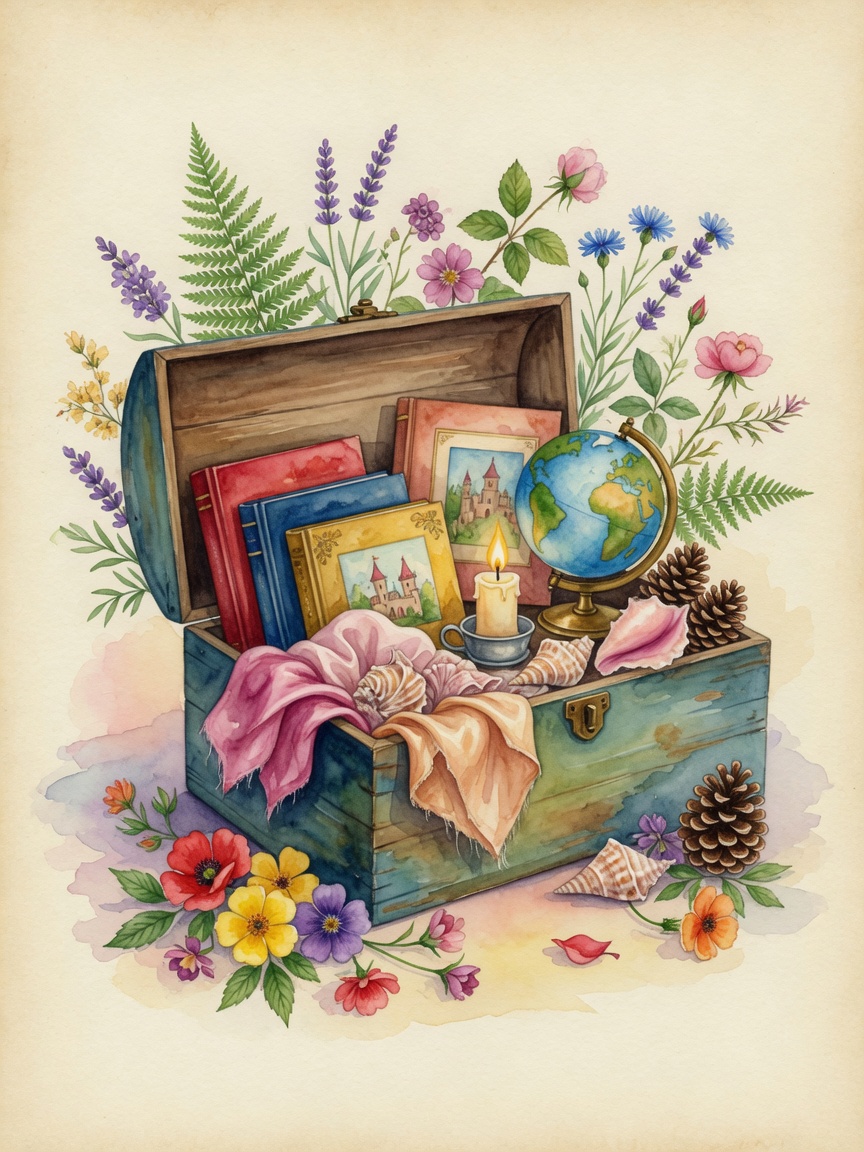
Every morning Elias rose before the sun, swept the frost from his stoop, and unlocked the little shop whose bell sang like a sparrow. His fingers moved slowly now, yet they still knew how to coax leather into shoes that walked like dreams. Mina, nine winters old, set the kettle and counted the coins that never quite reached the next rent day. The walls smelled of wax, wool, and yesterday’s bread. Outside, the cobbled lane glittered with ice.
One bitter dusk the last coin rolled into the crack beneath the floorboard and was gone. Elias closed the ledger, blew out the lamp, and told Mina they would finish the three pairs promised for the mayor’s ball. They stitched by candlelight until their eyes burned and the fire sank to ash. When the final stitch was tied, they laid the shining shoes on the counter and went to bed hungry.
At midnight something small stirred on the workbench. Two pairs of bare feet no larger than thimbles pattered across the wood. Tiny hands lifted the needle, pulled thread fine as hair, and turned each shoe inside out with stitches so neat they might have been written by moonlight. By dawn the shoes stood finished, glowing like chestnuts after rain.
Elias woke to find the mayor’s order complete and a single silver button left on the bench, warm from a tiny palm. He called Mina, who traced the perfect seams with wondering fingers. They placed the shoes in the window and watched the mayor’s coach stop. Coins clinked, rent was paid, and the kettle sang again.
That evening Elias mixed a bowl of cream and left three thimbles beside the cooling hearth. Mina scattered crumbs of shortbread on a folded cloth. They hid behind the curtain and waited, hearts drumming like mice on a drum. The clock struck twelve. Nothing moved but the settling coals.
Yet when the last ember blinked, three small figures slipped from the woodpile. They wore caps of thistledown and coats stitched from pocket-lint. One drank the cream, another nibbled the crumbs, and the tallest bowed toward the curtain before vanishing behind the bellows. Mina squeezed her father’s hand so tightly the bones ached.
Days passed in warmth and plenty. Elias mended boots for the postman, the midwife, and the widow who kept pigeons on her roof. Each night he and Mina set out a feast no larger than a saucer. The elves never appeared while eyes were open, yet the work was always finished and the crumbs always gone.
Mina began to notice how the elves limped on feet wrapped in dry leaves. She asked her father for scraps of softest lambskin and a needle fine enough to stitch a sigh. Together they cut three pairs of tiny boots, lining them with wool from an old mitten. They left the boots beside the cream and did not hide.
That night the elves found their gifts and danced in circles, heels flashing like struck flint. Their laughter sounded like spoons tapping crystal. When they vanished, the shop felt larger, as if joy had pressed the walls outward. Elias slept without waking once to the wind.
Winter deepened. Snow pressed against the shutters like white felt. One morning Mina discovered the elves’ footprints leading to the flour barrel and stopping at a fallen kernel. She followed the line to a crack in the wall where cold air hissed. Elias plugged it with wool and wax, yet he wondered how many other cracks let winter reach the elves.
A second storm arrived riding a black wind. The roof leaked above the cutting table, and a shining puddle widened on the floor. Elias climbed with a lantern while Mina held the ladder. They found three loose shingles and a family of sparrows sheltering beneath. The birds flew when the hammer sounded, leaving one gray feather on the ice.
By the time the roof was patched, Elias’s cough had settled deep in his chest. Mina brewed pine-needle tea and laid warm bricks at his feet. The elves still came, yet their dancing grew slower, and one left a trail of tiny muddy prints that did not dry by morning.
Mina woke to the sound of the shop bell, though the door had not opened. On the counter lay a pair of child-sized shoes, perfectly formed but never ordered. She slipped them on; they fit as though measured by someone who had watched her feet each dusk. She understood then that the elves had been measuring more than leather.
That afternoon a coach arrived carrying the mayor’s sister, whose own shoemaker had fallen ill. She ordered twenty pairs for a winter ball to be held at the town hall in three days. Elias tried to rise, but the cough bent him double. Mina promised she would finish the order if he rested, though she had never cut a sole alone.
She worked through the night, guided by the memory of her father’s hands. The elves appeared at midnight and watched from the shadows. When her thread tangled, one small figure darted forward, freed the knot, and retreated. By dawn twelve pairs stood finished, yet Mina’s fingers were raw and her eyes felt filled with sand.
On the second night she fell asleep at the bench, head pillowed on her arms. She woke to find the remaining eight pairs complete and a circle of crumbs arranged like stars around her wrist. A single thistle seed rested on her palm, still green though snow lay everywhere outside.
The morning of the ball dawned bright and cold. Elias felt strong enough to stand. Together they loaded the shoes into the mayor’s coach. The mayor’s sister counted each pair, paid in bright coins, and invited them both to the feast. Elias declined, saying the road was long and the snow uncertain, yet his eyes thanked Mina more than words could.
After the coach left, the shop seemed suddenly empty. Mina swept the floor, folded the unused leather, and noticed the elves’ boots standing neatly by the hearth, still waiting. She realized they had not danced since the roof was patched. She asked her father if the elves might be cold again.
That evening they left the window cracked a finger’s width and set the cream beside it. Snow drifted onto the sill, yet no footprints appeared. The cream froze untouched. Mina lay awake listening to the house creak and the far-off music from the town hall. She wondered whether the elves had found another house or whether something else had changed.
Near midnight she heard a faint tapping. Three small shapes stood on the sill, shivering. Their coats were torn, their feet bare once more. Mina opened the window wider. The tallest elf pointed to the boots by the hearth, then to the crack where wind still slipped through. Elias rose, took down the lantern, and searched until he found the gap behind the flour barrel.
They stuffed the crack with lamb’s wool and a strip of flannel. The elves watched, silent. When the last draft was sealed, the tallest elf stepped forward and offered Elias a tiny wooden whistle carved like a wren. Elias accepted it with a bow. The elves slipped into their boots, tested the fit with solemn hops, and vanished behind the woodpile.
From that night the whistle hung above the bench. Whenever the wind rose, Elias would blow a single soft note. The elves never showed themselves again, yet each morning the shoes were finished and the crumbs gone. Mina began to leave a folded cloth beside the cream, and sometimes it returned embroidered with a pattern of tiny leaves.
Spring came early. The lane turned to mud, then to dust, then to green. Elias’s cough disappeared with the frost. One afternoon Mina opened the door to find a basket of early violets on the step. No footprints led to or from it, yet the violets smelled of warm wool and candle wax.
On the first market day of May, Elias and Mina carried a bolt of new leather to the square. Children ran between stalls, and the bell of Saint Agnes rang clear. At the ribbon seller’s booth Mina noticed three tiny green stitches holding a strip of velvet. She bought the ribbon and tied it around the shop bell.
That evening the elves left a single silver coin on the bench, larger than any they had given before. It was warm, as though carried in a small hand all day. Elias placed it in the drawer with the others, yet he did not spend it. Instead he kept it as a reminder that gifts can travel both ways across a windowsill.
Years later, when Mina was old enough to cut her own soles, she still set out cream each winter night. Sometimes the cloth returned embroidered; sometimes it stayed empty. She never again saw the elves, but she taught her own children to leave the window open a finger’s width when the first snow fell, and to listen for dancing that sounded like spoons on crystal.
On the coldest night of one especially long winter, the whistle above the bench cracked. Elias mended it with pine resin and hung it again. That same night the cream disappeared, the crumbs were gone, and three perfect stitches appeared on the cuff of Mina’s oldest mitten. She wore the mitten to market the next day and felt the warmth travel all the way to her fingertips.
When Elias grew too old to climb the ladder, Mina took over the high shelves. One autumn afternoon she found a tiny pair of boots tucked behind a tin of wax, no larger than a sparrow’s skull and lined with the gray feather from the sparrows’ nest. She set them on the sill that first snowy night and left the window open. In the morning they were gone, and in their place lay a single green leaf, veined with silver, that never wilted no matter how many winters passed.