Music · Singing
Finding Your Singing Voice
The first singing lesson is not performance. It is learning to listen, breathe freely, match a small sound, and sing without shame.
For ages 3–10. Ten joyful minutes are better than one strained hour.
Aim
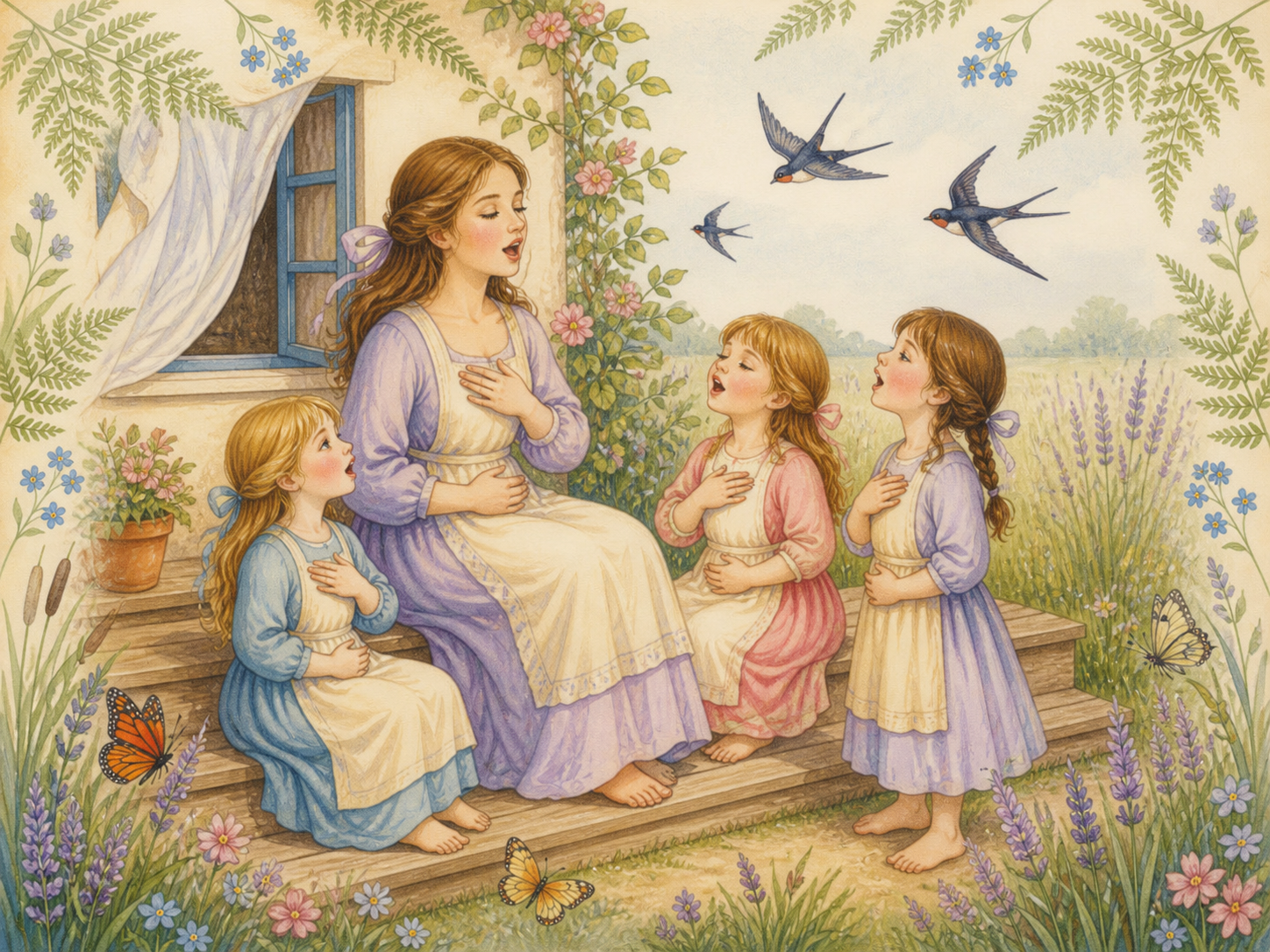
To help the child discover a natural, unforced singing voice through imitation, play, and short daily practice.
The child should leave knowing: My voice is an instrument I carry inside me.
By Age
Littles (3–6): sing with them. Use birds, bells, names, and tiny echo phrases. Never demand a solo.
Olders (7+): add posture, breath, pitch matching, diction, simple rounds, and the names of musical patterns.
Opening Verse
Breath comes in and song goes out,
Soft as birds and clear as bells.
I do not push; I do not hide.
My own true voice is here inside.
Prepare the Instrument
- Stand with feet steady and knees easy.
- Let shoulders rest and the back of the neck grow long.
- Open the ribs with a silent surprised breath.
- Exhale on a gentle sss, like air leaving a small balloon.
- Hum once with lips soft and teeth apart.
No chest lifting, shouting, or enormous breath is needed. Singing begins with freedom.
The Echo Game
Sing one tiny phrase on loo and let the child echo it. Begin with two nearby notes. Keep the sound light and conversational.
Try: a bird call, the child’s name, good morning, or come sing with me. If the child misses the pitch, repeat warmly at a comfortable height. Do not say wrong. Give the ear another chance.
Olders can echo three- and five-note patterns, then invent one for the parent to copy.
Find One Note
Play or sing one comfortable note. Hum it together. Then open the hum into mee or loo without making the sound louder.
Move slightly higher and lower until the child’s easiest range appears. Young voices are usually most comfortable higher than adults expect. Never press the child down into an adult’s low range.
The First Song
Choose a song the family already knows well, such as “Frère Jacques.” Speak the words first. Clap the rhythm. Sing one line and let the child echo. Then join the lines together.
Keep the beat steady and the starting note comfortable. Sing once for learning and once for pleasure. Stop before the voice tires.
Clear Words
Speak one lyric as if telling it to someone across the table. Then sing it with the same clear consonants and easy jaw.
Try playful patterns: mee-may-mah-moh-moo, a gentle lip trill, or a buzzing vvv. These are games, not drills to endure.
A Five-Day Singing Rhythm
- Day 1: breath, hum, and echo names.
- Day 2: clap the song’s words, then sing one verse.
- Day 3: echo three-note patterns and sing the full song.
- Day 4: sing while walking the beat or passing a beanbag.
- Day 5: family sing-through—no correction, only music together.
For Olders: The First Round
When the melody is completely secure, sing “Frère Jacques” as a round. The child begins; the parent enters after the first line.
If both parts collapse, laugh and begin together again. Holding one’s own melody beside another is advanced listening. It grows through repetition, not pressure.
Care of the Voice
- Never sing through pain, hoarseness, or illness.
- Offer water and ordinary room-temperature air.
- Do not ask a child to belt, imitate adult pop voices, or sing over loud accompaniment.
- Let changing adolescent voices work gently and without embarrassment.
- End while the sound is still easy.
Closing Verse
One breath, one voice, one song begun,
Many hearts can sound as one.
I listened close and sang it true;
The world has room for my song too.
Parent Note
A child who sings off pitch is not tone-deaf. Most children need a clearer model, a lighter sound, a more comfortable note, and many unashamed chances to listen and try again. Protect the child’s willingness to sing; technique can grow inside it.