Numbers Through Nature · 3

The Number 3 — The Clover

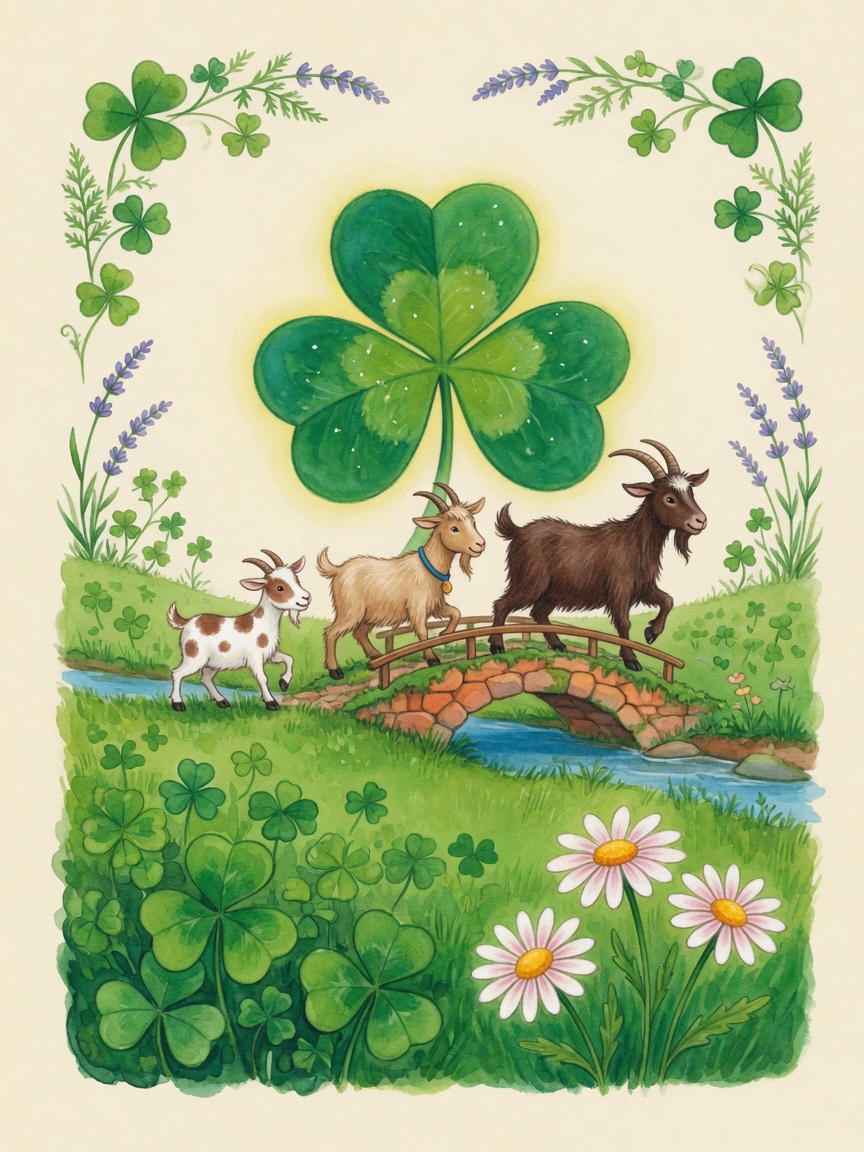
Three leaves on the clover, three goats on the bridge, three bears at the table — the storyteller’s number.

For ages 5–7. Numbers arrive as qualities first, quantities second.

Watercolor of the clover showing the number 3

Aim

To let the child meet the number 3 the Waldorf way: not as a mark on paper, but as a quality the world is made of — three leaves on the clover, three goats on the bridge, three bears at the table — the storyteller’s number.

Before a child counts, they should feel what each number IS. Quality first, quantity second, numeral last.

By age

Littles (3–4): the story and the nature walk are everything. No numerals.

Olders (5–7): the full path: story, finding the number in the world, walking and clapping it, gathering it, and writing it large at the end.

Materials

  • A basket for the gathering walk
  • Beeswax crayons and large paper
  • Smooth stones or chestnuts for counting work
  • Watercolors for the story picture

Opening Verse

One, two, three, the clover grows,
Three green leaves in a little rose,
Three goats trip-trap, three bears’ chairs —
Three is the number the story wears.

The Story

A little girl sat in the meadow picking clover for her rabbit, and every single clover she picked had three round leaves. "Why always three?" she asked the meadow.

And it seemed to her the meadow answered, the way meadows do, with everything at once:

"Three is the fairy-tale number," hummed the bees. "Three billy goats crossed the troll’s bridge — little, middle, and great. Three bears sat down to porridge — small, medium, and large. Three wishes, three tries, three brothers on the road: every good story walks on three legs."

"But why?" asked the girl.

"Because three is a beginning, a middle, and an end," said the old oak at the meadow’s edge, who had heard ten thousand stories. "Morning, noon, and night. Papa, mama, child. Two can only face each other — three can make a ring."

The girl looked at her clover: leaf, leaf, leaf around one center, a tiny green ring. She put it in her pocket, and it is well known that a three-leafed clover in the pocket means a story is coming.

Finding It In The World

Hunt the threes: clover leaves everywhere, the morning-noon-night of the day, beginning-middle-end of tonight’s story. Set the table for the three bears: big bowl, middle bowl, little bowl.

Gather threes on the walk: three acorns, three daisies, three smooth stones — and lay them on the season table in a ring, the way three likes to stand.

Movement

Live the three-stories with the whole body: trip-trap across a plank bridge three ways — tiny steps, middle steps, GREAT BIG steps. Sit in three chairs: too big, too small, just right.

Clap the rhythm of three — ONE-two-three, ONE-two-three — and sway to it like a slow dance; it is the waltz, and children fall into it like ducklings into water.

Writing Work

Only at the end of the week does the numeral come: write the 3 very large, once, beautifully, beside the child’s drawing of the story. The numeral is the nickname; the child has already met the whole name.

Spiritual Meaning

For the parent:

Arithmetic taught as pure abstraction bores children because it is homeless. Numbers found in suns, wings, and clover live somewhere — and a number that lives somewhere can be loved, remembered, and later reasoned with.

For the child, keep it simple:

3 is not just a mark. The world is full of threeness, and now you can see it everywhere.

Closing Blessing

Thank you, clover, green and small,
Three round leaves to tell it all:
A start, a middle, and an end —
Three makes every tale a friend.

Extension Ideas

  • Hunt the number 3 in the kitchen, the garden, and the storybook shelf all week.
  • Model it in beeswax or form it with a rope on the floor.
  • Bake it: shape bread dough into the numeral for the table.
  • One number a week; go slowly and let each one become a friend.

Parent Note

Waldorf math walks from whole to parts: the sun is one whole, wings come in pairs, the clover opens in threes. Counting drills can wait; the feeling for number cannot be drilled in later.