Numbers Through Nature · 2

The Number 2 — The Wings

Two wings, two eyes, two hands — the number of partners, and nothing flies with one.

For ages 5–7. Numbers arrive as qualities first, quantities second.

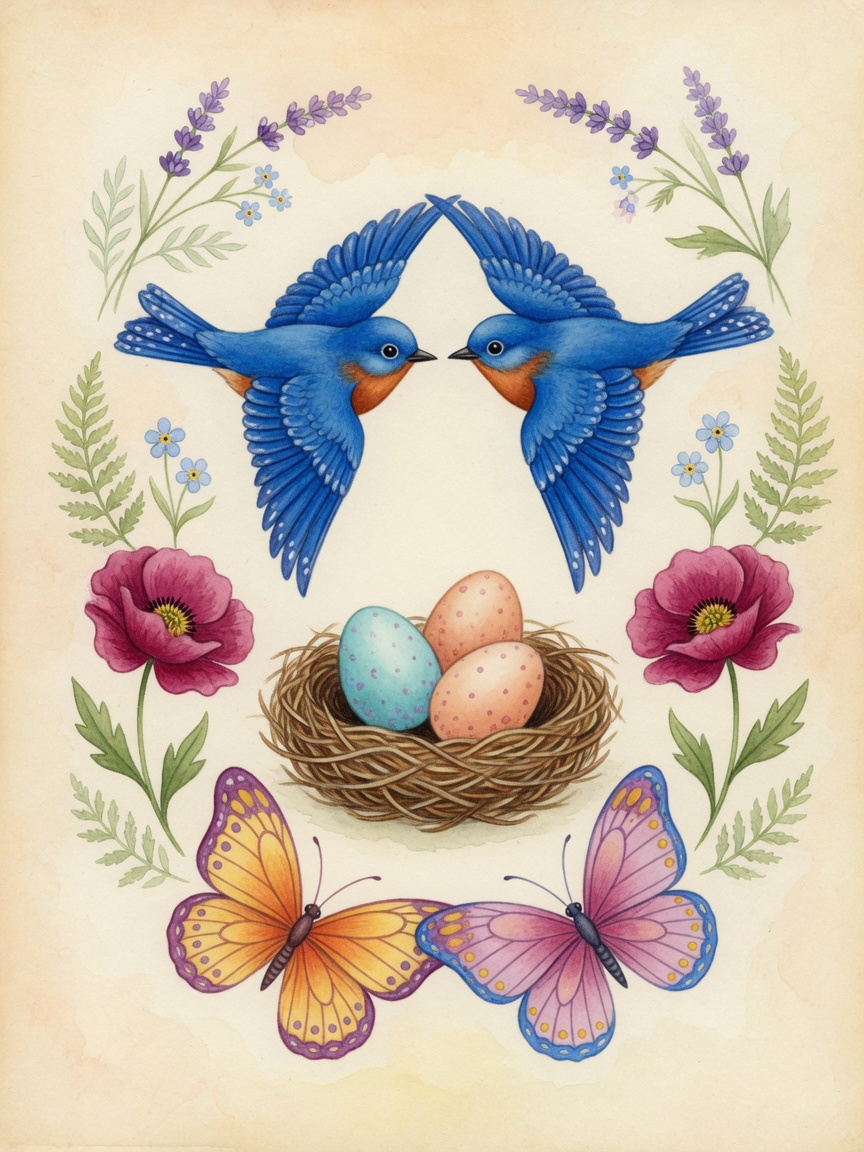
Watercolor of the wings showing the number 2

Aim

To let the child meet the number 2 the Waldorf way: not as a mark on paper, but as a quality the world is made of — two wings, two eyes, two hands — the number of partners, and nothing flies with one.

Before a child counts, they should feel what each number IS. Quality first, quantity second, numeral last.

By age

Littles (3–4): the story and the nature walk are everything. No numerals.

Olders (5–7): the full path: story, finding the number in the world, walking and clapping it, gathering it, and writing it large at the end.

Materials

  • A basket for the gathering walk
  • Beeswax crayons and large paper
  • Smooth stones or chestnuts for counting work
  • Watercolors for the story picture

Opening Verse

Two wings lift the bird so high,
Two eyes watch the morning sky,
Two hands clap and two feet run —
Two together gets things done!

The Story

There was once a young bird who did not want to fly. "Flying is too hard," he said, and he sat on the edge of the nest.

"Try one wing," teased his sister. So he flapped one wing as hard as he could — and spun in a circle and sat down dizzy in the nest, and the whole tree laughed, leaves and all.

"Now the other wing alone," said his sister. He spun the other way. More laughing.

"Now," said his mother gently, "both together."

And both wings beat as one — left and right, left and right, like two hands clapping, like two feet walking — and the young bird rose over the nest, over the tree, into the blue morning.

"Oh!" he cried. "Two is how flying works!"

"Two is how MOST things work," called his mother, flying beside him — and she was right, as mothers of birds usually are.

Finding It In The World

Hunt the pairs: two eyes, two ears, two hands, two feet on every person in the family. Two wings on every bird and butterfly in the garden. Shoes, socks, mittens — the whole house is full of faithful pairs.

Gather pairs on the walk: two matching stones, two leaves from the same tree. Set them on the season table two by two, like animals boarding the ark.

Movement

Everything in twos: clap hands together, stamp two feet, blink two eyes tight. Fly like the young bird — one wing (spin and fall down laughing, this is required), then both wings together, soaring around the garden.

Then partner work: two children (or child and mama) row a boat holding hands — it only works with two.

Writing Work

Only at the end of the week does the numeral come: write the 2 very large, once, beautifully, beside the child’s drawing of the story. The numeral is the nickname; the child has already met the whole name.

Spiritual Meaning

For the parent:

Arithmetic taught as pure abstraction bores children because it is homeless. Numbers found in suns, wings, and clover live somewhere — and a number that lives somewhere can be loved, remembered, and later reasoned with.

For the child, keep it simple:

2 is not just a mark. The world is full of twoness, and now you can see it everywhere.

Closing Blessing

Thank you, wings, for flying two,
For pairs that see the whole world through,
Left and right and me and you —
Nothing lonely about two.

Extension Ideas

  • Hunt the number 2 in the kitchen, the garden, and the storybook shelf all week.
  • Model it in beeswax or form it with a rope on the floor.
  • Bake it: shape bread dough into the numeral for the table.
  • One number a week; go slowly and let each one become a friend.

Parent Note

Waldorf math walks from whole to parts: the sun is one whole, wings come in pairs, the clover opens in threes. Counting drills can wait; the feeling for number cannot be drilled in later.