The Seasons · Spring

Spring Lesson

Seeds in the dark earth, rain and sun taking turns, and the whole world waking up.

Begin near the spring equinox, or whenever the first green appears.

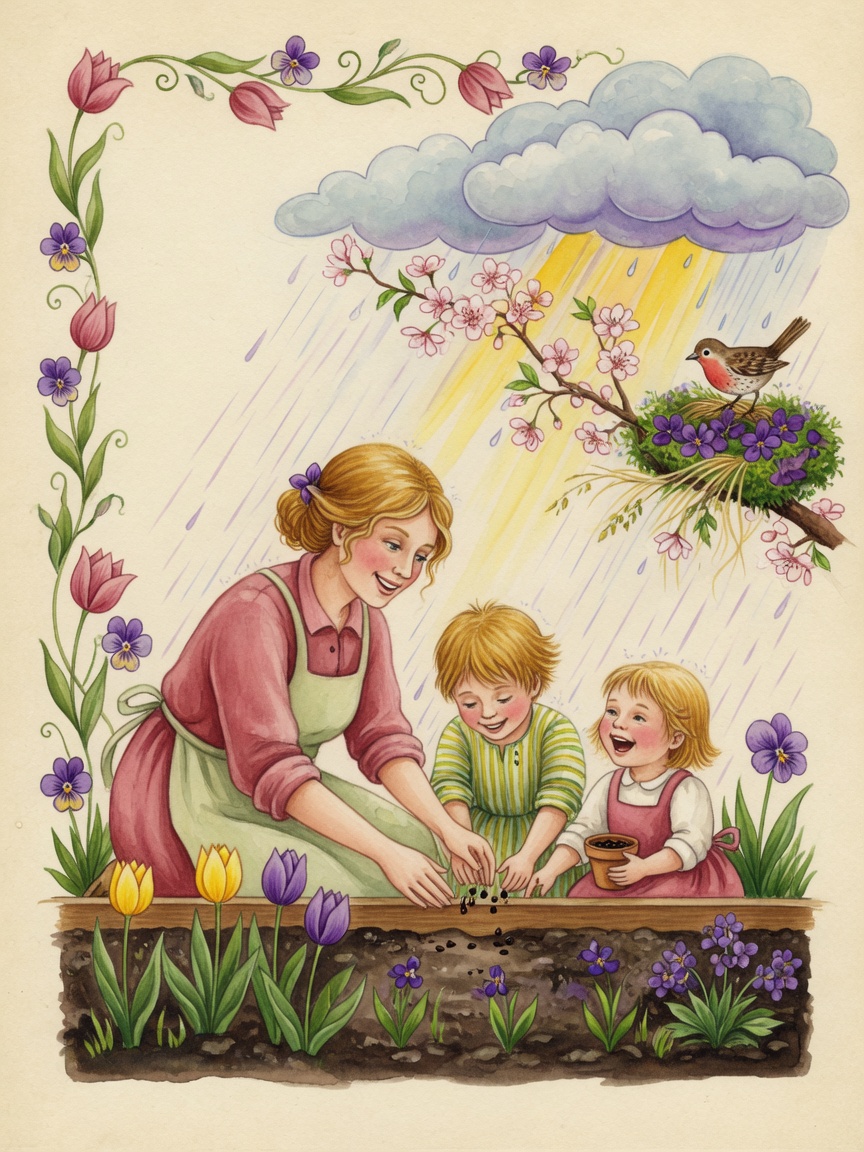
Watercolor of a mother and children planting seeds as spring rain clouds part

Aim

To let the child meet Spring as the season of waking: seeds stirring, rain softening the ground, birds building, and everything beginning again.

Spring is the child’s own season — they recognize themselves in it. The lesson works with that kinship instead of explaining it.

By age

Littles (3–6): planting one seed, watching for the first sprout, and splashing in one puddle is the whole lesson.

Olders (7+): keep a sprouting jar on the windowsill, draw it every third day, and write one line — First the seed, then the root, then the green.

Materials

  • A few large seeds — beans, sunflowers, peas
  • A small pot or garden corner, and good soil
  • A glass jar with a damp cloth for windowsill sprouting
  • Pale green and rose watercolor paints, brush, paper
  • A green cloth for the season table, with the first flowers of the year

Opening Verse

Wake up, little seed, the winter is done,
Here is the rain and here is the sun.
Stretch your root and lift your head,
Spring is calling: leave your bed!

Set The Season Table

Change the nature table to spring: a green cloth, the first blossoms or pussy willows, an empty nest if you find one fallen, a little dish of seeds waiting to be planted.

The season table is the heart of every season unit. The child should watch it change through the year the way the world outside changes.

Story

Tell this with a real seed in your hand:

Deep in the dark earth, a little seed lay sleeping all winter long. The snow lay over her like a thick white blanket, and she dreamed small brown dreams.

One day, something warm touched the earth far above. Then something soft came trickling down — tap, tap, tap — the spring rain, knocking gently.

"Who is there?" whispered the seed.

"It is the rain," said the rain. "Wake up. It is time."

"I am too small," said the seed. "I am afraid of the big world."

"You will not go alone," said the rain. "First send your root down. The earth will hold you. Then send your green shoot up. The sun will meet you."

So the little seed was brave twice: once downward, once upward. And when her first green leaf unfolded in the light, the whole garden said: welcome.

Planting Work

Plant the seeds together — slowly, with ceremony. One hole, one seed, one gentle cover of soil, one drink of water, and the words: Grow, little seed, grow.

Put two or three seeds in the windowsill jar as well, wrapped in the damp cloth, so the children can see what the earth is doing in secret underground.

Movement

Be the seed: curl up small and tight on the floor under a blanket — winter. The parent is the rain, tapping gently on backs. Slowly, slowly, root down, shoot up, unfold, and bloom with arms wide.

Then be the birds: fly, gather invisible twigs, and build a nest of cushions big enough for everyone.

Watercolor Painting

Paint with pale spring green and rose on wet paper. Let a green shoot rise from the bottom edge and a rose blossom bloom above.

Say: In spring the colors are young. They are still learning to be bright.

Practical Work

Real spring work, one job per day: rake winter leaves off a garden bed, wash the muddy boots, fill a small vase with the first flowers, open the windows and let the new air in.

Spiritual Meaning

For the parent:

Spring teaches that beginnings are brave and mostly invisible. The seed works in the dark long before anyone applauds. A child who plants and waits learns that growth is faithful, not instant.

For the child, keep it simple:

The world wakes up. The seed is brave twice: down and up. Everything begins small.

Closing Blessing

Thank you, spring, for rain and seed,
For every root and waking weed,
For nests above and green below —
Now watch with us, and help us grow.

Extension Ideas

  • Visit the same tree each week and watch its buds open.
  • Listen for the first birdsong before breakfast and name the singer "our bird."
  • Read The Turnip from the story shelf — a spring planting story.
  • Let the sprouting-jar bean go all the way to the garden when it is strong.

Parent Note

Spring with small children is mud, and mud is curriculum. Dress for it, allow it, and keep one clean towel by the door. Reverence and wet knees go together in this season.