The Seasons · Summer

Summer Lesson

The garden at full strength, the bees at their work, long light and bare feet.

Begin near midsummer, when the flowers and the bees are busiest.

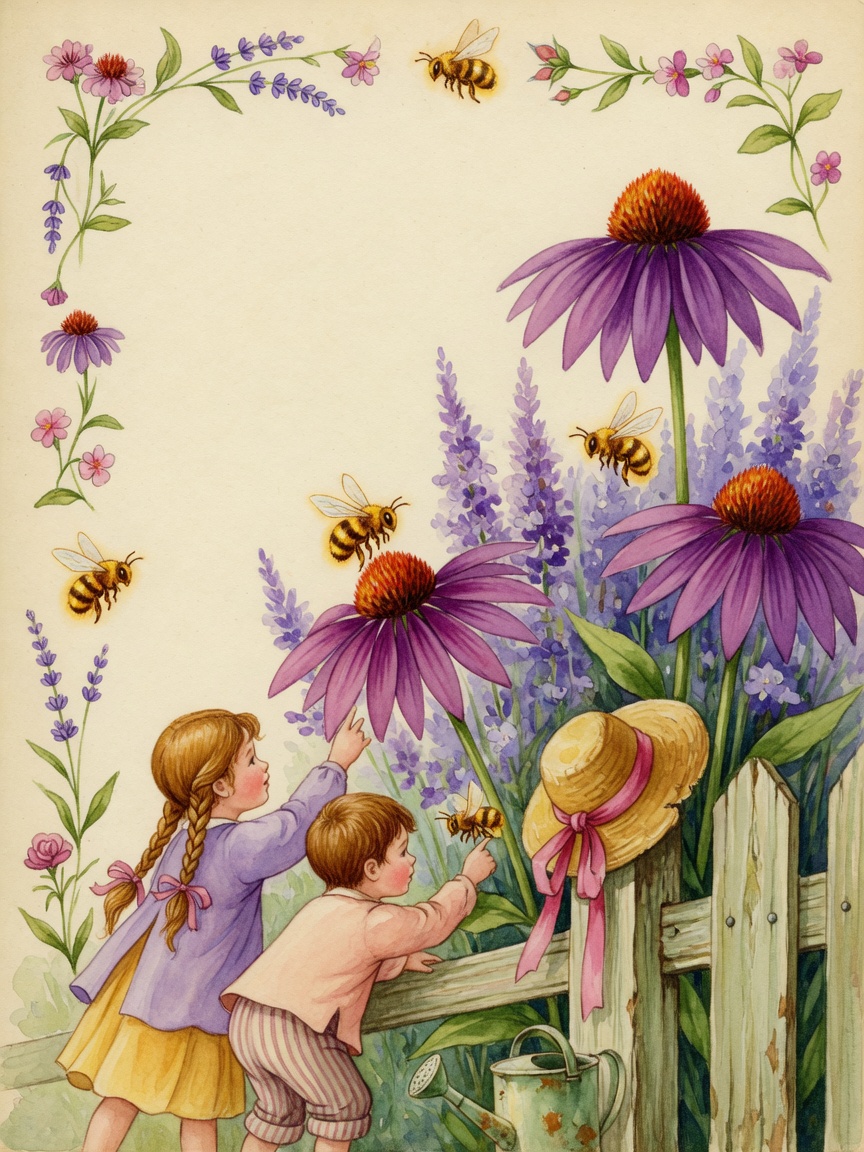
Watercolor of children among coneflowers and bees by a garden fence

Aim

To let the child meet Summer as the season of fullness: the garden giving, the bees working, the sun at the top of its hill.

Where spring was waking, summer is abundance — and the lesson of abundance is gratitude and generosity.

By age

Littles (3–6): flowers, bees, watering, and bare feet in warm grass are the whole lesson.

Olders (7+): follow one bee flower-to-flower and count her visits; learn that midsummer is the longest day; write one line — The sun is at the top of his hill.

Materials

  • A blooming flower bed or pots — coneflowers, lavender, sunflowers, whatever the garden gives
  • Small watering cans
  • Bread and honey for the summer table
  • Golden and rose watercolor paints, brush, paper
  • A gold cloth for the season table with summer flowers

Opening Verse

Golden sun and humming bee,
Summer garden, full and free,
Every flower holds the light —
Thank you, summer, warm and bright.

Set The Season Table

Turn the nature table to summer: a gold cloth, a jar of the garden’s best blooms, a sunflower head, smooth warm stones, a little dish of honey.

Story

Once there was a little bee who lived in a golden city of wax with ten thousand sisters. One summer morning she flew out to work for the first time.

She said good morning to the purple flowers, and each one gave her a tiny drink of nectar and dusted her coat with gold. All day she worked, flower to flower, a hundred times and a hundred more.

She did not know she was carrying gifts from flower to flower — that because of her there would be seeds, and because of seeds there would be flowers again next summer.

In her whole busy life, the little bee makes just one small spoonful of honey. That is why we say thank you before we taste it.

Garden Work

Every summer morning: water at the roots, slowly; one gentle touch — petal, leaf, warm stone; one bloom for the table when the garden can spare it.

Then bee-watching from the blanket: pick one bee and follow her with your eyes from flower to flower. Calm bodies, slow hands.

Movement

Be the bees — fly flower to flower around the yard, sip, buzz, and waggle-dance home to show your sisters where the good flowers are.

On the hottest days, be the sunflower instead: stand tall and turn your face slowly with the sun, morning to evening.

Watercolor Painting

Paint with honey gold and rose. Let a great gold sun bloom in the middle of wet paper, and touch small rose flowers beneath it.

Say: Summer does not hurry. It shines.

The Honey Table

End the week at the table: fresh bread, a small dish of honey, the garden’s flowers in a jar. Before tasting, say together: Thank you, flowers. Thank you, bees.

Spiritual Meaning

For the parent:

Summer is the festival of visible generosity — the year giving itself away. Children learn gratitude best at the moment of plenty, not the moment of loss.

For the child, keep it simple:

The garden gives. The bees work. We say thank you with our hands and at our table.

Closing Blessing

Thank you, summer, gold and green,
For every bee and bloom we’ve seen,
For bread and honey, sun and shower —
We’ll say our thanks with every flower.

Extension Ideas

  • Spend four weeks in one flower bed: the flowers, the bees, the buds, then the seeds.
  • Hold a small midsummer festival: flower crowns, jar lanterns, and a golden supper outside.
  • Sun-dry apple slices or herbs on a cloth.
  • Mark the sunset time now and again in a month — watch the light begin to turn.

Parent Note

Summer school is barefoot and early. Do garden work before the heat, keep afternoons for shade and water play, and let the season itself set the pace.