Speech & Language · Ages 3–4

Speech Clarity Play

Eleven tiny lessons for helping words become easier to hear—through listening, imitation, useful objects, rhythm, and stories.

Eight to ten minutes. Warm models. No shame, tests, or repeated correction.

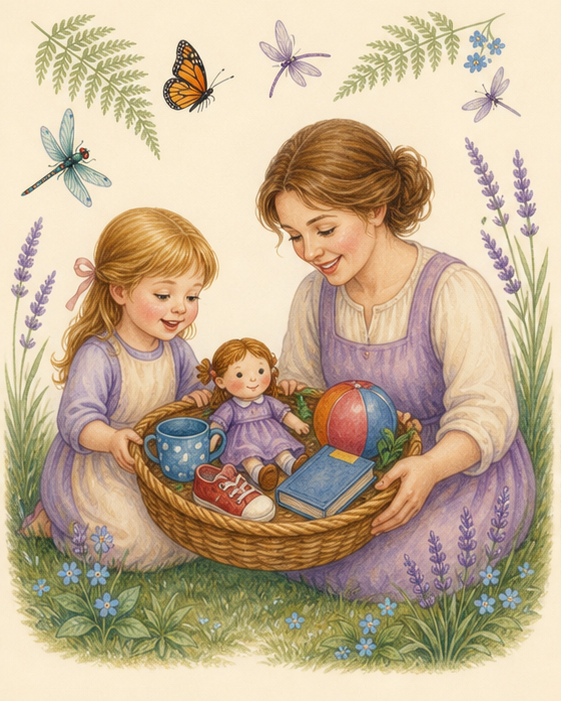
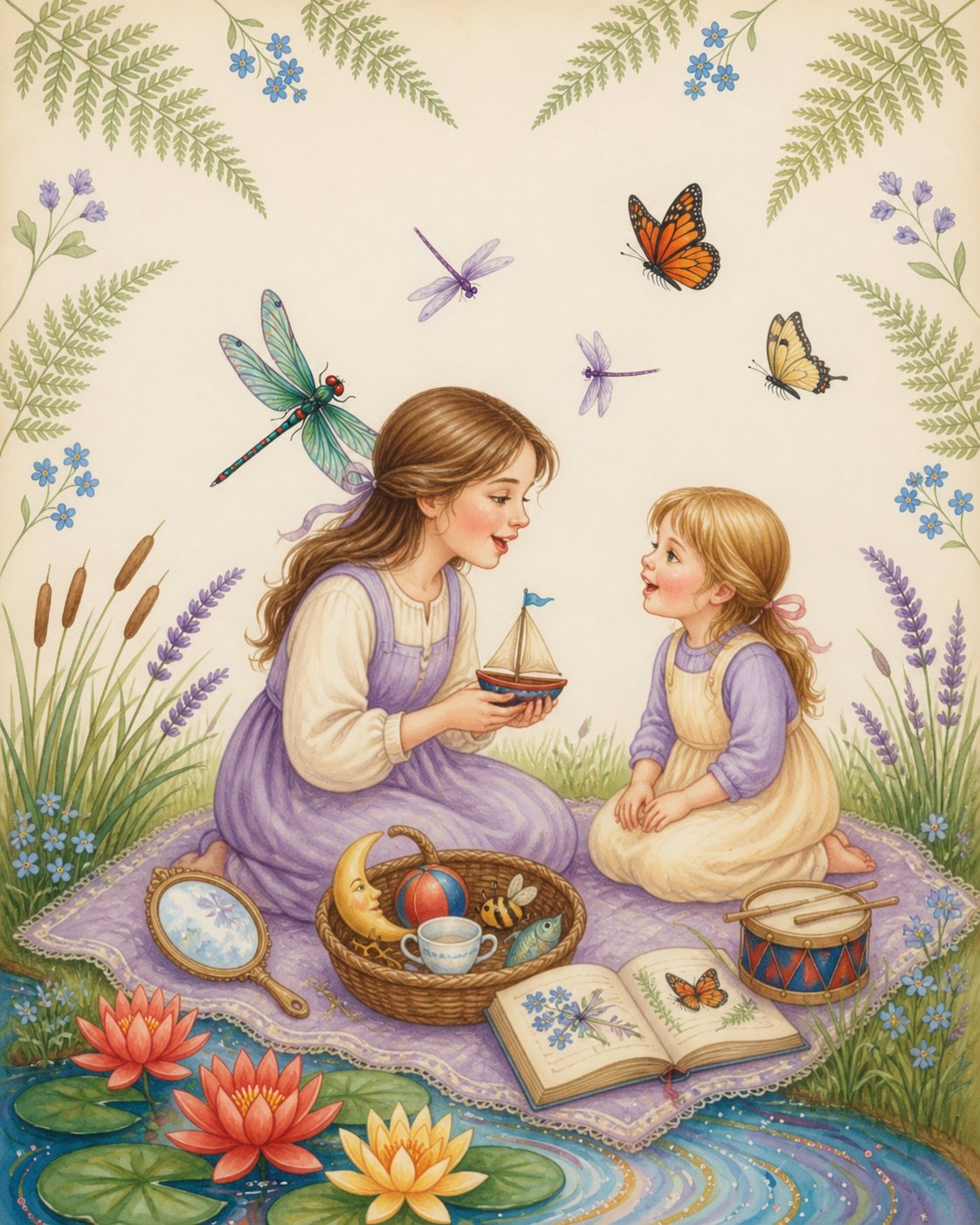
Watercolor of a mother and young child joyfully playing an echo word game with familiar toys

Before you begin

Home practice supports speech. It does not diagnose it.

When an almost-four-year-old has difficulty across most pronunciation—not only one or two later-developing sounds—the right next step is an evaluation by a speech-language pathologist. Ask the pediatrician about a speech-language evaluation and a hearing screening. Keep using these lessons while you wait; they are designed as warm language play, not a replacement for individualized therapy.

Worth arranging now if:
  • People who know the child well often cannot understand her.
  • Many beginning or ending sounds disappear.
  • The same word comes out very differently each time.
  • Speaking causes visible struggle, frustration, or withdrawal.
  • There are concerns about hearing, frequent ear infections, language understanding, chewing, or swallowing.

Age guidance: ASHA 3–4 communication milestones and ASHA speech sound assessment guidance.

How to use the series

  1. Choose one lesson and stay with it for several playful days.
  2. Sit beside or across from the child so she can see your face naturally.
  3. Model a word once or twice. Invite—but never demand—an echo.
  4. If she says it differently, answer with the correct word inside a warm phrase: Yes, a big cup!
  5. Stop while she still wants more. Eight happy minutes beat twenty strained ones.

Do not begin with difficult later sounds such as R, TH, SH, CH, L, S, V, or Z. At this age, some errors on those sounds can still be developmental. This series begins with listening, whole words, and earlier sound families.

Opening Verse

My ears can listen, my eyes can see,
Your clear, kind words come close to me.
I take my time; I try through play.
My brave little voice grows every day.

The lesson path

Eleven Speech-Clarity Lessons

Move in order, but do not wait for perfection. The goal is a richer, steadier sound system—not a performance.

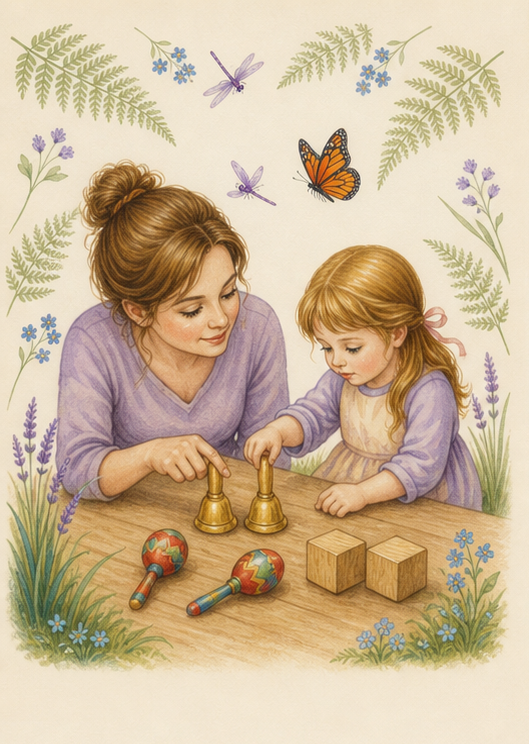
Watercolor of a mother and child matching bells, shakers, and blocks by sound
Lesson 1

Listening Ears: Same or Different?

Before a child can change a sound, she must notice sounds and compare them.

Open the lesson

Gather

Two bells or spoons, two shakers, two blocks, and a small cloth.

Play

  1. Make one sound where she can see it. Name it: bell, shake, tap.
  2. Hide the objects. Make one sound and let her point to the object.
  3. Make two sounds. Ask, “Same or different?” Accept pointing.
  4. End with three animal sounds for her to identify or imitate.

Parent model: Speak slowly and naturally, not loudly. Listening is the work today.
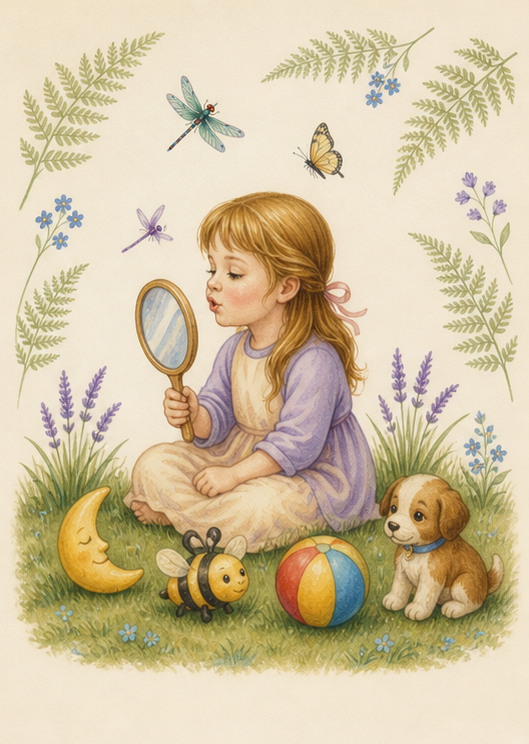
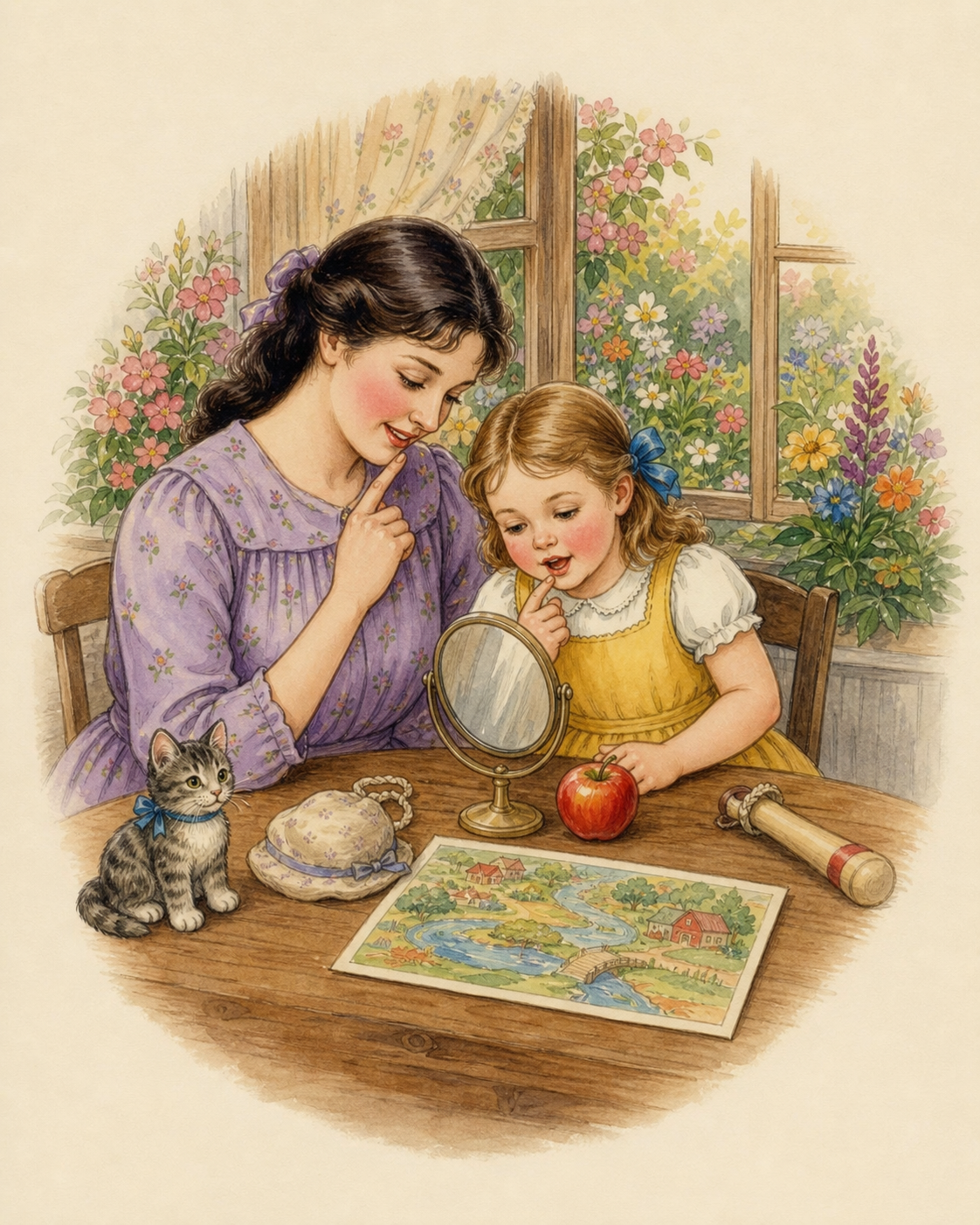
Watercolor of a child using a mirror with a moon, bee, ball, and puppy
Lesson 2

The Lip Family: M, P & B

These visible early sounds give the child an easy place to feel and see speech begin.

Open the lesson

Gather

A mirror and objects for moon, mama, puppy, pop, bee, baby, ball.

Play

  1. Hum mmm together and feel the lips close.
  2. Make a soft popping p; then a voiced b. Keep it playful.
  3. Choose one object. Model its word once, then use it in play: Baby bounces. Pop the bubble.
  4. Let the toy “ask” for the word; accept the child’s best try.

Do not: hold her face, force placement, or ask for ten repetitions.

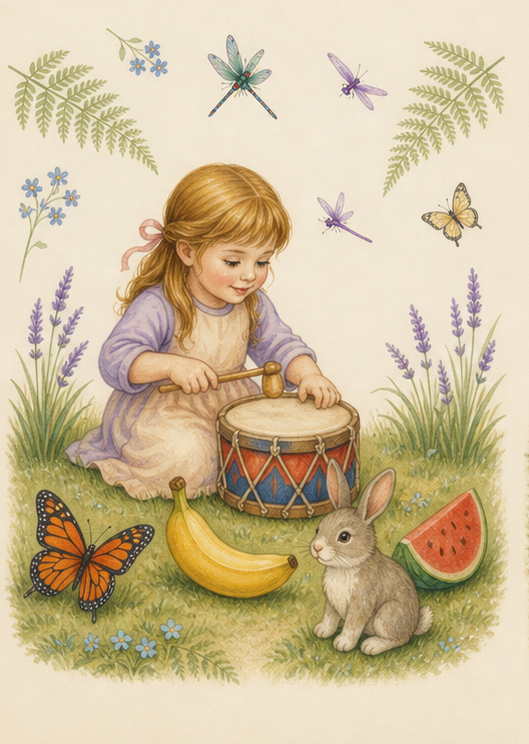
Watercolor of a child tapping a drum beside familiar multisyllable objects
Lesson 3

Tap Every Beat

Whole syllables make words much easier to understand, even before every sound is perfect.

Open the lesson

Gather

A drum or table and toys or pictures for tiger, donut, bunny, banana, butterfly, watermelon.

Play

  1. Say each word normally.
  2. Say it again while tapping every syllable: ti-ger, ba-na-na.
  3. Let her tap while you say it, then trade roles.
  4. Put each word into a tiny phrase: big tiger, yellow banana.

Listen for: all the beats—not perfect T, D, or N yet.

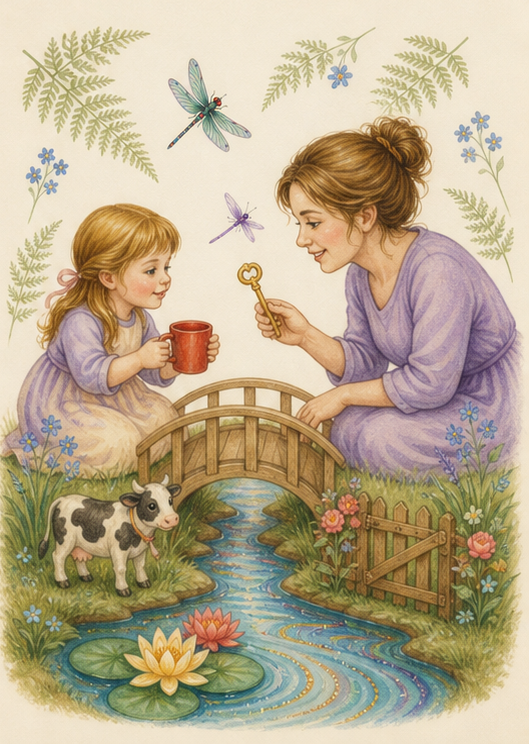
Watercolor of a mother and child echoing words with a cup, key, cow, and gate beside a toy bridge
Lesson 4

The Back-Sound Bridge: K & G

K and G are often replaced by sounds made farther forward. Use an echo game, not correction.

Open the lesson

Gather

A toy bridge and objects for key, cup, cow, car, go, gate, gum, game.

Play

  1. Send one toy across the bridge while modeling its word.
  2. Use a short cue: “The sound comes from the back.” Do not poke or press the tongue.
  3. Try easy syllables in play: key-key, go-go.
  4. Use the word in a useful phrase: Go, car! or My cup.

If K or G will not come: keep modeling and move on. An SLP can find the right cue.

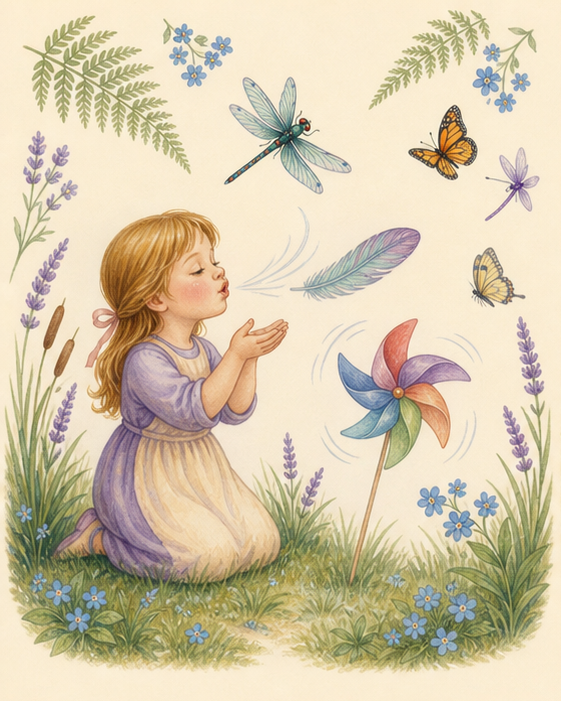
Watercolor of a child watching a feather and pinwheel move with gentle air
Lesson 5

Gentle Air: F, H, W & Y

Hear the difference between a long airy sound and a quick stopped sound.

Open the lesson

Gather

A feather, pinwheel, and toys for fish, foot, hat, horse, water, wheel, yellow, yes.

Play

  1. Listen first: stretch ffffish and hhhhhat very gently.
  2. Contrast one long sound with one quick sound: fan–pan, only as a listening game.
  3. Move the feather once, then immediately use the sound in a real word.
  4. Choose two favorite words for short phrases.

Important: This is speech practice, not breath strengthening. Ordinary easy breathing is enough.

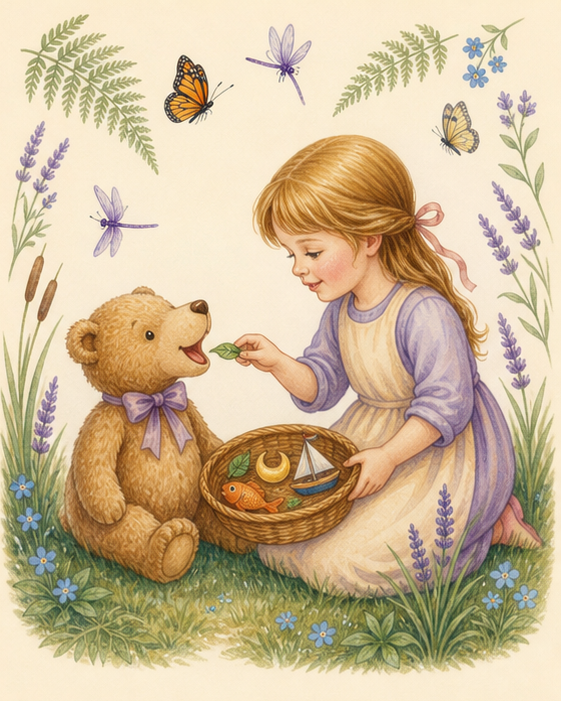
Watercolor of a child feeding a teddy bear objects with clear ending sounds
Lesson 6

Finish the Word

An audible ending can transform a hard-to-understand word, even when the ending is not perfect.

Open the lesson

Gather

A toy animal and objects for leaf, fish, moon, boat, cup, book, bed.

Play

  1. Feed the animal one object at a time.
  2. Model the final sound with slight emphasis: cuP, mooN—never a shouted extra syllable.
  3. Say two choices, one complete and one unfinished. Let her choose what sounds right.
  4. Use the complete word once in a phrase.

Goal: Let the listener hear that the word has an ending.

Watercolor of a mother and child choosing familiar useful objects from a basket
Lesson 7

Five Power Words

Practice the words she needs most, aiming for her clearest consistent version.

Open the lesson

Choose

Pick five useful words from daily life: a name, mama, help, more, water, cup, shoes, open, stop, or another favorite.

Play

  1. Put the five matching objects in a treasure basket.
  2. Model each word naturally during real play.
  3. Celebrate the clearest version; do not demand an adult-perfect version.
  4. Use the same five words all week in meaningful moments.

Track gently: Is the word becoming more consistent and easier to recognize?

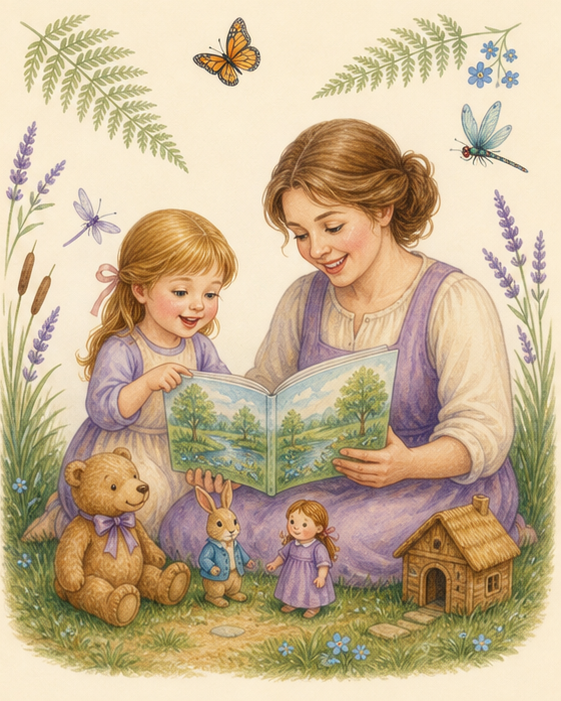
Watercolor of a mother and child telling a story from a wordless picture book
Lesson 8

Clear Little Phrases

Carry the child’s best words into two- and three-word phrases without losing ease.

Open the lesson

Gather

A wordless picture book, three toy characters, and the five power words.

Play

  1. Begin with one steady frame: I see ___.
  2. Add action frames: Bear is running. Baby wants water.
  3. Tell a three-part toy story: first, then, last.
  4. Let her retell it. Respond to meaning first, then recast unclear words naturally.

End with success: Repeat one phrase she said clearly and tell her what you understood.

Watercolor of a mother and child practicing short A with an apple, cat, hat, bag, and mirror
Lesson 9

Apple Mouth: Short A

Hear and explore the open vowel in apple, cat, and hat.

Open the lesson

Gather

A small mirror and objects or pictures for apple, cat, hat, bag, map, bat.

Listen

  1. Say two words and let her point to the one she hears: bed–bad, pen–pan, men–man. Listening comes before saying.
  2. Model a relaxed, open mouth: jaw gently down, tongue resting low and forward. Say a short, natural aaa as in apple—never a long shout.
  3. Let each object jump into a basket when its short-A word is heard.
  4. Choose three easy words and place them in short phrases: red apple, black cat, my hat.

Tiny story

The cat had a hat. The hat sat on the bag. The cat grabbed the hat. Tell it with toys, then invite her to finish one repeated word.

Parent model: If she says another vowel, answer with the correct word inside a warm phrase: Yes, the cat sat.

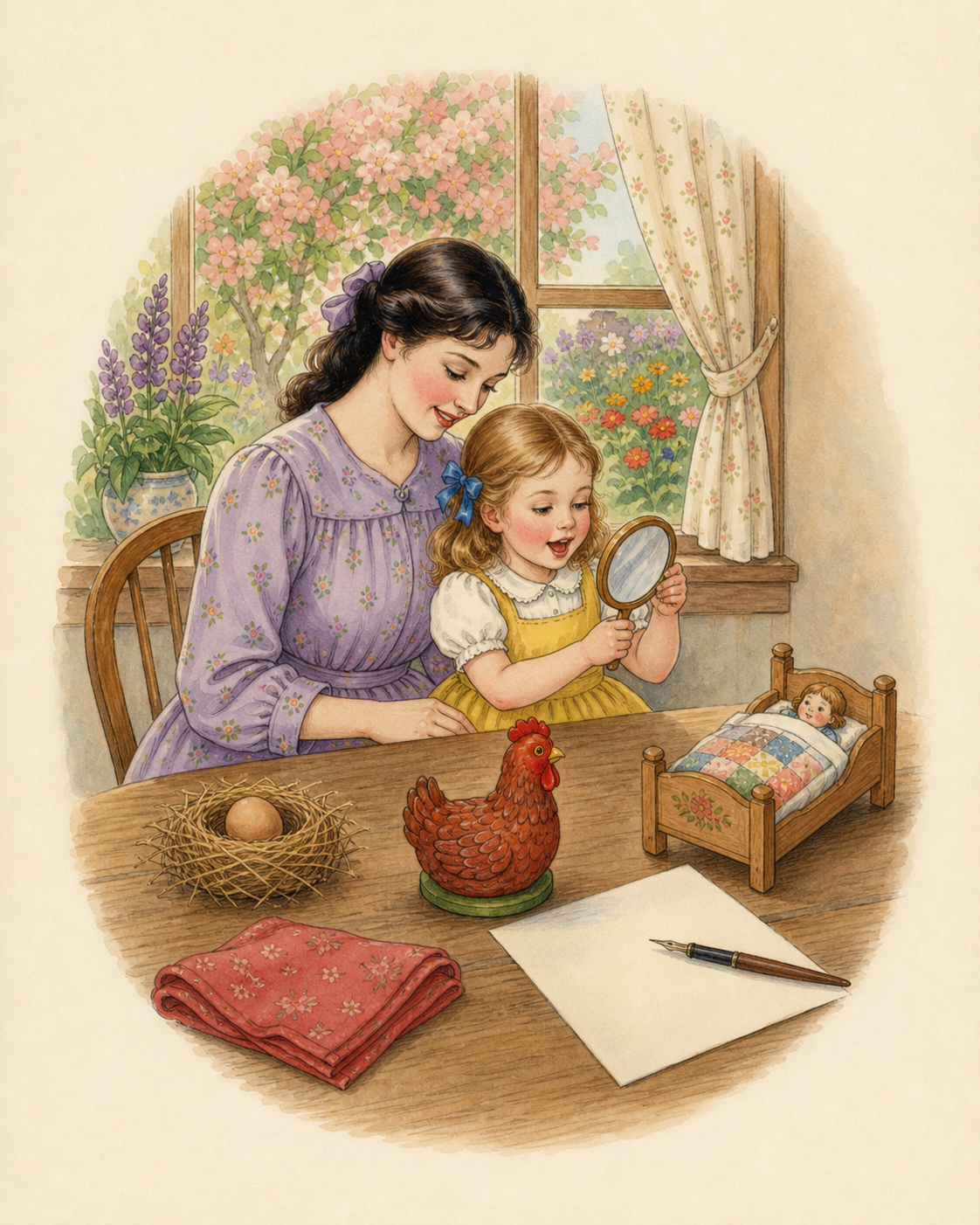
Watercolor of a mother and child practicing short E with an egg, red cloth, hen, bed, and mirror
Lesson 10

Egg Sound: Short E

Find the small, relaxed vowel in egg, bed, hen, and red.

Open the lesson

Gather

A mirror and objects or pictures for egg, bed, hen, red, pen, ten.

Play

  1. Listen for the difference in pan–pen, man–men, and bad–bed. She may point instead of speak.
  2. Show a relaxed mouth, slightly open, with the tongue resting forward. Model a brief eh as in egg.
  3. Put each short-E object into a little nest when she hears its name.
  4. Use three phrases: red hen, ten eggs, little bed.

Tiny story

The red hen left an egg by the bed. Then the hen went to get it. Pause before the short-E words so she can join.

Keep it natural: Practice the vowel inside real words. Avoid long strings of isolated eh, eh, eh.

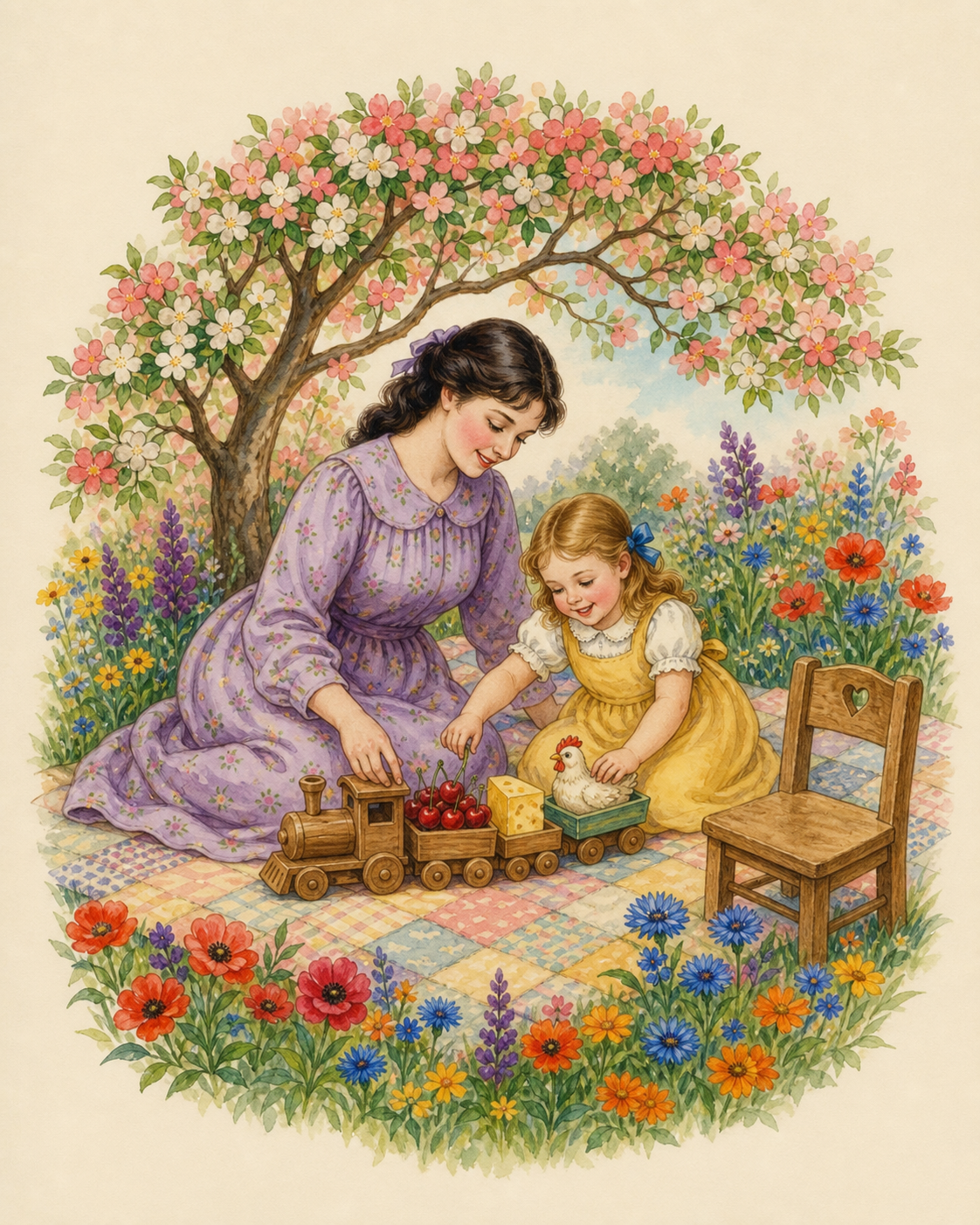
Watercolor of a mother and child practicing CH with a wooden train, chicken, cherries, and cheese
Lesson 11

The CH Train

Hear CH as one quick sound and explore it through a joyful choo-choo game.

Open the lesson

Gather

A wooden train and objects or pictures for chair, cheese, chicken, cherry, lunch, beach.

Listen

  1. Say a pair and let her point to the CH word: tea–cheese, tip–chip, shop–chop.
  2. Round the lips gently. Place the tongue just behind the top teeth and release one small burst: ch. Never push or hold her tongue.
  3. Move the train only when she hears CH. Mix choo, moo, boo, choo, two, chew.
  4. Load the train with CH objects, then try cherry chair, chew cheese, and chicken lunch.

Tiny story

The chicken chose a cherry. She chased the train to the chair and ate her lunch.

Age note: CH may still be emerging at almost four. Explore it briefly; do not demand mastery. If it will not come, keep modeling and let the SLP choose the best cue.

A gentle weekly rhythm

  1. Monday: one listening game and the opening verse.
  2. Tuesday: one sound-family lesson with three favorite objects.
  3. Wednesday: tap whole syllables and use two-word phrases.
  4. Thursday: practice the five power words during real family life.
  5. Friday: tell a tiny story; record one minute only if the child enjoys it.

Repeat the same small set of words across the week. Consistency matters more than novelty.

The parent’s language

Instead of: “No. Say it correctly. Cat. Cat. Cat.”

Use: “Yes, the cat is sleeping. Soft cat.”

ASHA advises parents to provide accurate speech models rather than repeatedly correcting a young child’s sound errors. Protect the child’s wish to communicate. Meaning comes first; clearer form grows beside it.

Closing Verse

I listened close and took my time,
I tapped each word and found its rhyme.
No need to hurry, hide, or fear—
My words grow steady, brave, and clear.