Language Arts · Idioms
Words That Paint Pictures
Why are two people like peas in a pod? Discover the picture hidden inside everyday sayings—and what the speaker really means.
For ages 4–10. One saying at a time is enough for younger children.
Aim
To teach children that some phrases mean more than the literal words say. These expressions are called idioms. The child will listen for the word-picture, infer the intended meaning, and try the phrase in a sentence.
The child should leave knowing: “Two peas in a pod” means two people or things are very much alike or nearly always together.
By Age
Littles (4–6): use a real pea pod or picture, act out each saying, and teach only three or four phrases. Let them guess before you explain.
Olders (7+): name the literal meaning and intended meaning, use each idiom in context, and notice that idioms do not always translate word for word into another language.
Materials
- A pea pod or a picture of one
- Twelve small slips of paper
- Crayons or colored pencils
- Two bowls labeled by the parent: What the words say and What the speaker means
Opening Verse
Words can tell and words can play,
Words can paint what mouths cannot say.
Listen close and you may find
A little picture for the mind.
Begin With Two Peas
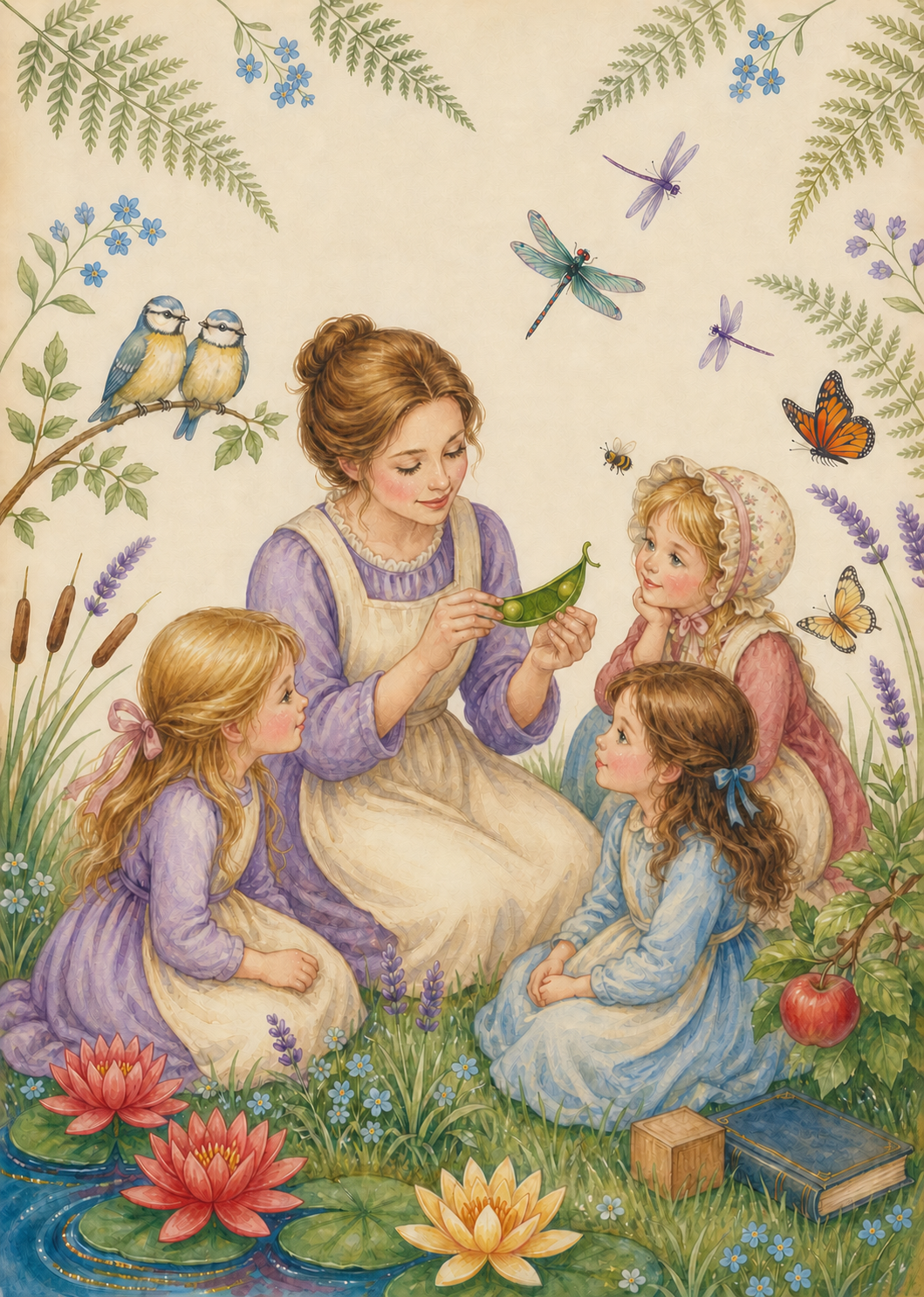
Show the children a pea pod. Open it if you have a real one. Notice how the peas grow close together, inside the same pod, looking almost alike.
Say: “You two are like two peas in a pod.”
Ask: “Am I saying you are really vegetables?” Let them laugh. Then explain: “No. The picture is of two little peas nestled together. I mean you are very alike, very close, or often together.”
Important: the familiar phrase is two peas in a pod, not two peas in a pot. A pod is the green case in which peas grow.
Sayings About Being Alike
Birds of a feather flock together.
Literal picture: birds with the same feathers gather in one flock.
Meaning: people with similar interests or habits often choose one another’s company.
The apple doesn’t fall far from the tree.
Literal picture: an apple lands near the tree that grew it.
Meaning: a child often resembles a parent in looks, gifts, or habits.
Cut from the same cloth.
Literal picture: two pieces are cut from one length of fabric.
Meaning: two people have very similar qualities or character.
On the same wavelength.
Literal picture: two radios receive the same signal.
Meaning: two people understand each other or are thinking in a similar way.
Two sides of the same coin.
Literal picture: different faces belong to one coin.
Meaning: two things seem different but are closely connected parts of one idea.
More Picture-Phrases
A piece of cake means something is very easy.
Hold your horses means slow down or wait.
Spill the beans means reveal a secret or tell the news.
Under the weather means feeling unwell.
Butterflies in my stomach means feeling nervous or excited.
Once in a blue moon means very rarely.
Raining cats and dogs means raining very heavily.
Hit the nail on the head means say or do exactly the right thing.
Match The Meaning
Write six idioms on six slips of paper. On six more slips, write their meanings. Mix them and ask the children to find the pairs.
Then choose one card and make two quick drawings: the silly literal picture and the real intended meaning. For hold your horses, one picture might show someone holding two horses; the other might show a child stopping and waiting.
Finish The Saying
Read each beginning and let the children finish it:
- Two peas in a… pod
- Birds of a… feather
- A piece of… cake
- Hold your… horses
- Spill the… beans
- Once in a blue… moon
Now reverse the game: give the meaning and ask which saying fits. “I feel a little sick today.” Under the weather.
Questions To Ask
- Who do you know who are like two peas in a pod?
- Which family trait shows that the apple did not fall far from the tree?
- What feels like a piece of cake to you now?
- When have you had butterflies in your stomach?
- Can you invent a funny phrase whose words paint a picture?
A Five-Day Rhythm
Day 1: Open a pea pod and learn the anchor phrase.
Day 2: Learn three sayings about people who are alike.
Day 3: Draw one literal meaning beside its intended meaning.
Day 4: Play the matching and finish-the-saying games.
Day 5: Listen for idioms in family conversation or a read-aloud. Add each one to a family phrase book.
Closing Verse
Some words mean just what they say,
Some words take the picture-way.
Eyes may see and ears may hear—
Meaning makes the message clear.
Parent Note
Idioms are easy for adults to overlook because we no longer hear their strangeness. Children do. When a child asks about one, pause and honor the question: give the literal picture first, then the intended meaning, then a real sentence. That three-step pattern builds vocabulary, inference, humor, and flexible thinking at once.