Parents lead.
Political and social narratives are the responsibility of parents. This homeschool keeps education clear, parent-first, and grounded in the family.
Our way
Diana Does Homeschool begins with a simple conviction: parents lead formation, and children need a childhood rich enough to become strong, capable, articulate, faithful, useful, and free-thinking.
Foundation
Academics matter. So do habits, attention, play, beauty, story, family culture, reverence, nature, and practical competence.
Political and social narratives are the responsibility of parents. This homeschool keeps education clear, parent-first, and grounded in the family.
A steady rhythm calms the body and frees the mind. Repetition is not dull to young children; it is security.
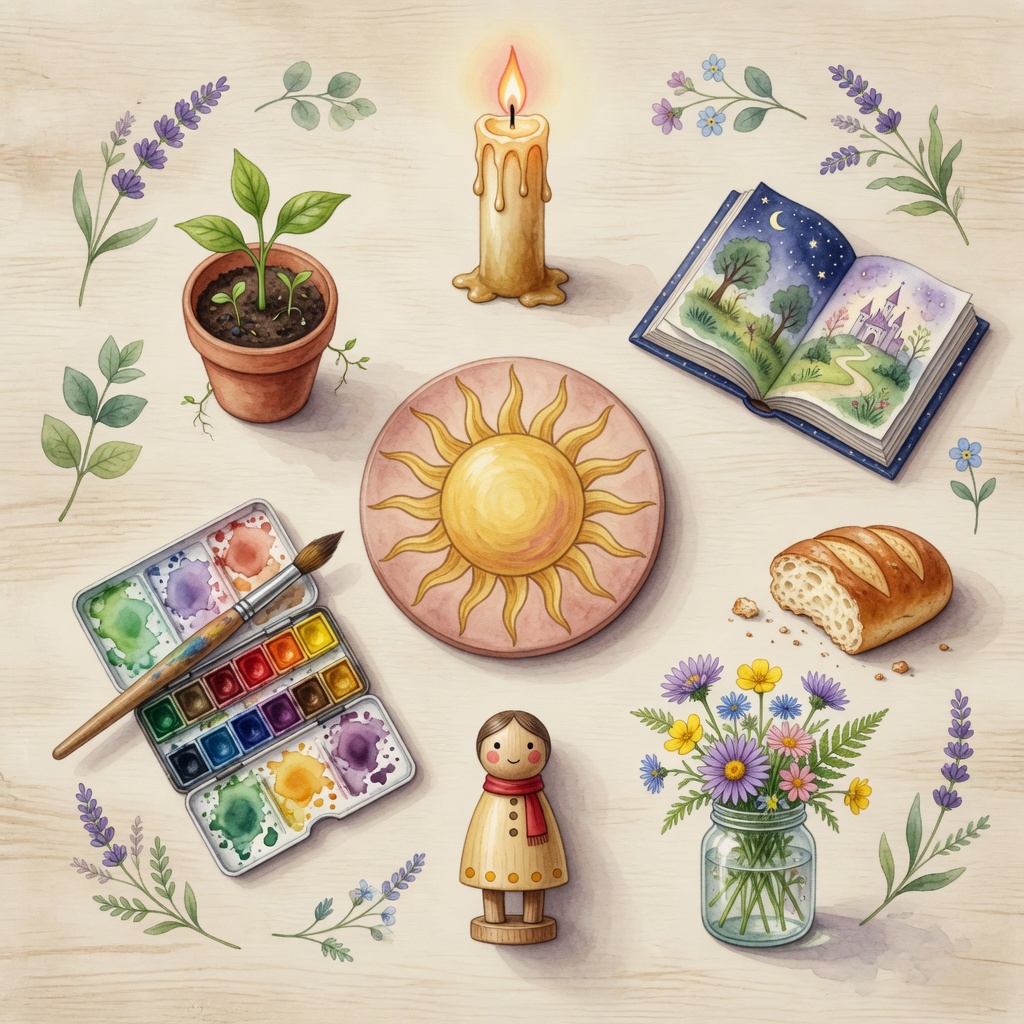
Watercolor, flowers, songs, clean tables, good books, candlelight, gardens, poetry, and handmade things all train attention.
Cooking, gardening, arranging flowers, setting the table, caring for books, drawing, singing, and helping gently are part of education.
The framework
Before heavy academics, children need a living foundation. These seven essentials become the pattern behind the weekly plans.
Predictable days: waking, meals, outside time, lessons, stories, play, rest, and bedtime.
Fairy tales, Scripture if desired, folk tales, family stories, history, and narration.
Nursery rhymes, folk songs, hymns, counting songs, hand-clap games, and memory.
Weather, gardens, birds, rocks, seeds, seasons, sunlight, dirt, and observation.
Stirring, kneading, tasting, serving, flowers on the table, recipes, and hospitality.
Art, music, flowers, cloth, candles, books, handmade things, order, and color.
Rest time, low screens, early bed, unhurried Sundays, and space for imagination.
Curriculum map
This is the weekly scope. It gives structure without flattening childhood into worksheets.
Daily poem, oral narration, one sound family, copywork, song, rhyme, and story retelling.
Counting, grouping, measuring, recipe fractions, money, time, skip counting, and real household problems.
Weather, sky, trees, birds, herbs, soil, water, seasons, observation walks, and a living nature shelf.
Beeswax, watercolor, bread, peg dolls, folding, weaving, mending, table setting, and useful kitchen work.
Truth, courage, stewardship, gratitude, hospitality, service, family memory, local history, and love of home.
Candle rhythm, gratitude, silence, sacred story if desired, reverence, and the practice of wonder.
Implementation
Prepare one shelf and one basket. The curriculum should feel ceremonial, not complicated.
Violet, red, yellow, orange, green, blue/indigo, white or gold. Fold them in order on the shelf.
One peg doll, fairy, saint, pioneer child, or symbolic figure for each day. Keep them simple and loved.
Use the day pages as the operating system. Do not over-plan. Repeat the week until the rhythm becomes natural.
Once the rhythm holds, add folk songs, founding stories, local heroes, family lineage, maps, and service projects.