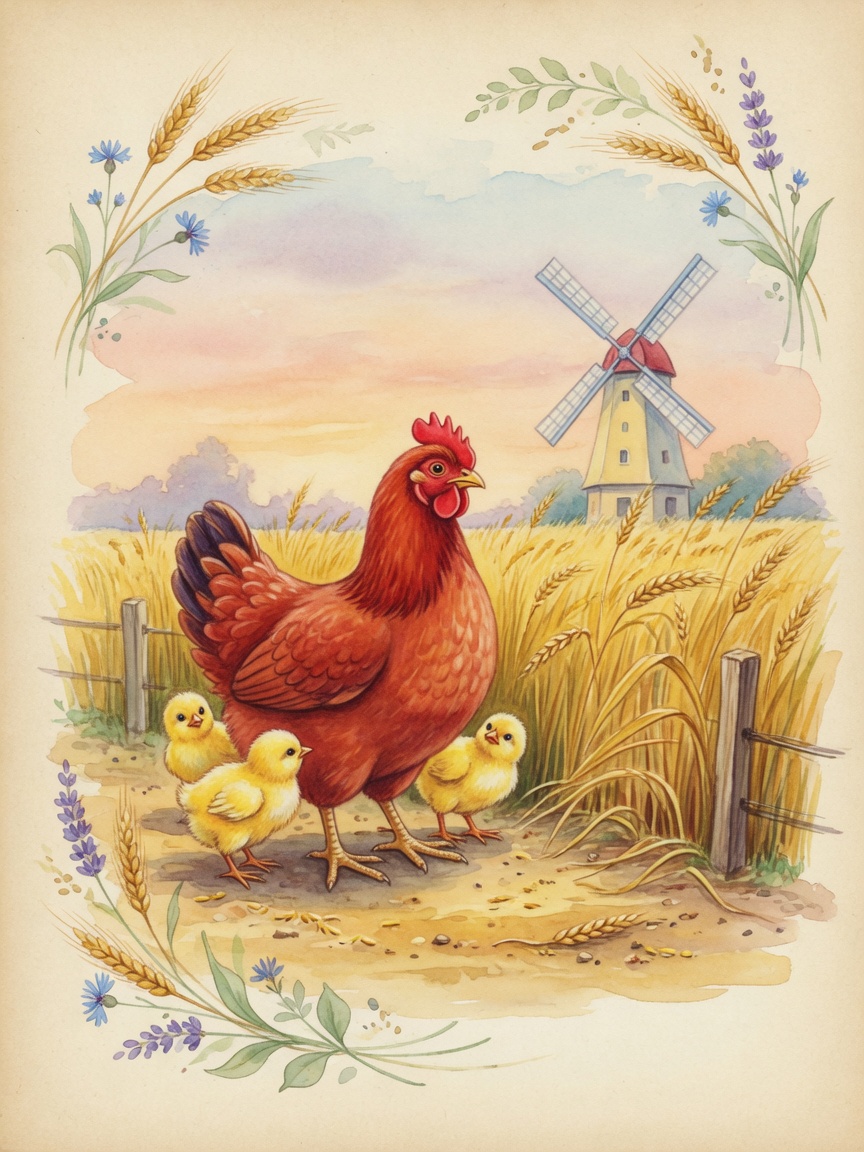
In a small white house at the edge of a green field lived a little red hen. She shared the yard with a duck, a cat, and a pig. The hen worked early each morning, scratching for grain, tidying the straw, and keeping watch over every corner of the garden.
One spring day the little red hen found a single grain of wheat lying in the dust by the gate. She held it in her beak and looked at it carefully. The grain was small and dry, but it held the promise of bread if someone would plant it.
She turned to the duck, who was dozing under the lilac bush. 'Will you help me plant this grain of wheat?' she asked. The duck opened one eye. 'Not I,' he said. 'I am far too busy with my pond.'
The hen walked to the shade of the apple tree where the cat was stretching. 'Will you help me plant this grain?' she asked. The cat licked a paw. 'Not I,' she answered. 'I must keep my fur clean for the warm afternoons.'
The pig lay in the cool mud by the fence. 'Will you help me plant this grain of wheat?' the hen asked. The pig grunted and rolled deeper into the muck. 'Not I,' he said. 'Planting is tiresome work.'
So the little red hen carried the grain to the edge of the garden, scratched a shallow furrow with her strong toes, dropped the seed in, and covered it with earth. Each day she carried water in her beak and sprinkled the spot until a green shoot rose above the soil.
All summer the wheat grew tall and golden. When the heads were heavy, the little red hen asked her neighbors once more. 'Who will help me cut the wheat?' The duck, the cat, and the pig gave the same answers as before.
The hen found an old sickle in the shed, sharpened it on a stone, and worked through the heat of the afternoon until the stalks lay in neat rows. She gathered them into a bundle and carried them to the threshing floor.
Again she asked, 'Who will help me thresh the wheat?' Again the others refused. So she beat the stalks with a flail until the kernels rattled loose on the boards. She swept them into a basket and set the basket on the kitchen table.
The next morning the little red hen asked, 'Who will help me take the wheat to the mill?' The duck, the cat, and the pig stayed silent. She lifted the basket onto her back and walked the long road to the mill at the bend of the river.
The miller ground the grain between heavy stones. When he finished, he handed her a sack of fine white flour. The hen thanked him and started home, the sack bumping against her wings with every step.
At the house she set the flour on the table. 'Who will help me bake the bread?' she asked. Once more the duck, the cat, and the pig turned away. The hen lit the oven, mixed the flour with water and salt, and kneaded the dough until her wings ached.
She shaped the loaves, slid them onto the oven shelf, and closed the iron door. The smell of baking bread drifted across the yard. The duck lifted his head, the cat opened both eyes, and the pig raised his snout to sniff the air.
When the crusts were golden and the loaves sang with hollow sound when tapped, the little red hen drew them out. She set them on the windowsill to cool. The warm scent filled every corner of the yard.
At noon she placed the bread on the kitchen table and called her neighbors. 'Who will help me eat this bread?' she asked. The duck waddled forward. 'I will,' he said. The cat stretched and stepped closer. 'I will,' she purred. The pig trotted to the door. 'I will,' he grunted.
The little red hen looked at each of them in turn. 'No,' she said quietly. 'You did not plant the wheat. You did not cut it or thresh it or carry it to the mill. You did not bake it. You shall not eat it.'
She closed the door, sat at the table with her chicks, and broke the first loaf. The crust crackled under her beak, and the soft center steamed in the light from the window.
Outside, the duck returned to his pond, the cat lay back in the shade, and the pig rolled again in the mud. The yard grew quiet except for the sound of small wings tearing bread.
That evening the hen swept the crumbs into her apron and carried them to the garden for the sparrows. She did not speak of the day's work again, but every animal remembered the smell that had filled the air.
Days later the hen found another grain of wheat by the gate. She held it up to the light and considered the long tasks ahead. Without a word she walked to the garden and began to scratch the soil once more.
The duck watched from the lilac, the cat watched from the tree, and the pig watched from the fence. None of them moved. The hen dropped the seed, covered it, and went to fetch water.
Summer passed into harvest again. The wheat grew tall, was cut, threshed, and ground. Loaves cooled on the same windowsill. The hen called her neighbors, received the same offers, and gave the same answer.
In time the youngest chick asked why the others never helped. The hen answered, 'They choose their own work and their own rest. We choose ours.' The chick nodded and went back to pecking crumbs.
One winter morning the yard lay under frost. The hen shook snow from her feathers and looked at the empty basket that had once held flour. She thought of the single grain that had become many loaves and of the neighbors who had watched every step.
She did not complain. She gathered her chicks, showed them how to clear a path to the shed, and began the slow work of sorting seed for spring. The duck, the cat, and the pig stayed in their places and did not offer to help.
When the ground thawed, the hen planted again. The wheat rose, ripened, and was gathered. Bread cooled on the sill. The family ate together while the smell drifted across the yard and the three neighbors listened in silence.
Years later the chicks grew into hens and roosters of their own. Each spring they planted their share of grain. They cut, threshed, milled, and baked without asking who would share the work. The bread they made fed their own families and left no crumbs for those who only watched.
The little red hen grew old and gray around the eyes. On clear afternoons she still sat by the garden and watched the green shoots rise. She never expected the duck, the cat, or the pig to change their ways, and they never did.
The story of the bread and the single grain passed from one brood to the next. Children learned to plant before they asked who would eat, and the yard remained quiet except for the sound of wings at work.