Nature Science · Ages 3–6

Weather Watchers

Seven living lessons for meeting the sky through observation, story, movement, experiment, art, and useful work.

Choose one lesson each week, then keep a one-minute weather watch each day.

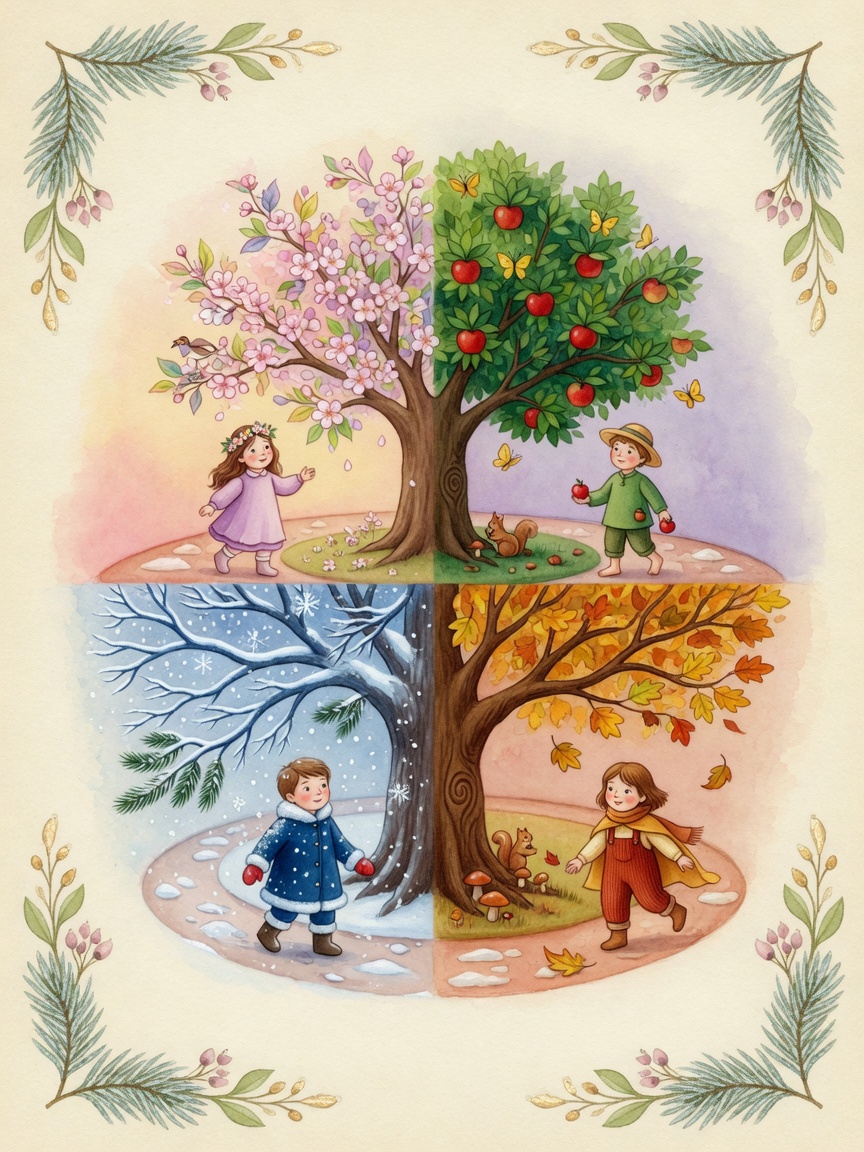
Watercolor of the four seasons arranged in a harmonious circle

How to use the collection

  1. Begin at a window or outdoors. Ask, What do we notice? before naming the answer.
  2. Read the tiny story and speak the verse once.
  3. Choose one movement, experiment, or practical task. You do not need to do everything.
  4. Add one picture or mark to the weather journal.
  5. Repeat the same lesson through the week so experience can deepen.

Safety belongs inside the lesson. Adults handle hot water, glass, sharp tools, and storm decisions. Never watch lightning outdoors or near an open window.

Opening Verse

Good morning, sky so wide and high,
What story will you tell nearby?
With watching eyes and listening ear,
We greet the weather gathered here.

The lesson path

Seven Weather Lessons

These lessons move from what a young child can feel directly toward careful daily observation.

Bright watercolor sun lesson illustration
Lesson 1

The Sun Warms the Earth

Sunlight brings light and warmth, while shade changes what we feel.

Open the lesson

Tiny story

Morning Sun reached over the hill and touched a stone, a leaf, and one small child. The stone held the warmth. The leaf lifted. The child made a long shadow and waved.

Discover

  1. Place one dark and one light cloth in the sun for five minutes. Feel both, then compare with cloth kept in shade.
  2. Trace the child’s shadow with chalk in the morning and again later. Notice that it moved.
  3. Stand in sun, then shade. Ask: What changed?

Move & make

Curl small like a seed at night; rise and open like a sunflower when the sun appears. Paint a wet-on-wet yellow circle spreading warmth into pale blue.

Weather words: sunlight, warmth, shade, shadow, bright.
Watercolor water lesson illustration
Lesson 2

Clouds Carry Water

Clouds are made of tiny water droplets or ice crystals gathered in the air.

Open the lesson

Tiny story

A little drop rose unseen from the pond. High in the cool air it joined a thousand other drops, and together they wore a white cloud-coat across the sky.

Discover

  1. Look for wispy, puffy, flat, bright, and dark clouds. Let the child describe before you name.
  2. Adult demonstration: put warm water in a clear jar, rest a chilled plate on top, and watch moisture gather. Keep the child’s hands away from hot water and glass.
  3. Hold a cold metal spoon over warm steam at a safe distance and notice droplets form.

Move & make

Float lightly as a small cloud, gather together, grow heavy, then fall as rain. Paint soft cloud shapes by lifting blue watercolor with a clean cloth.

Weather words: cloud, droplet, vapor, gather, gray.

Watercolor air lesson illustration
Lesson 3

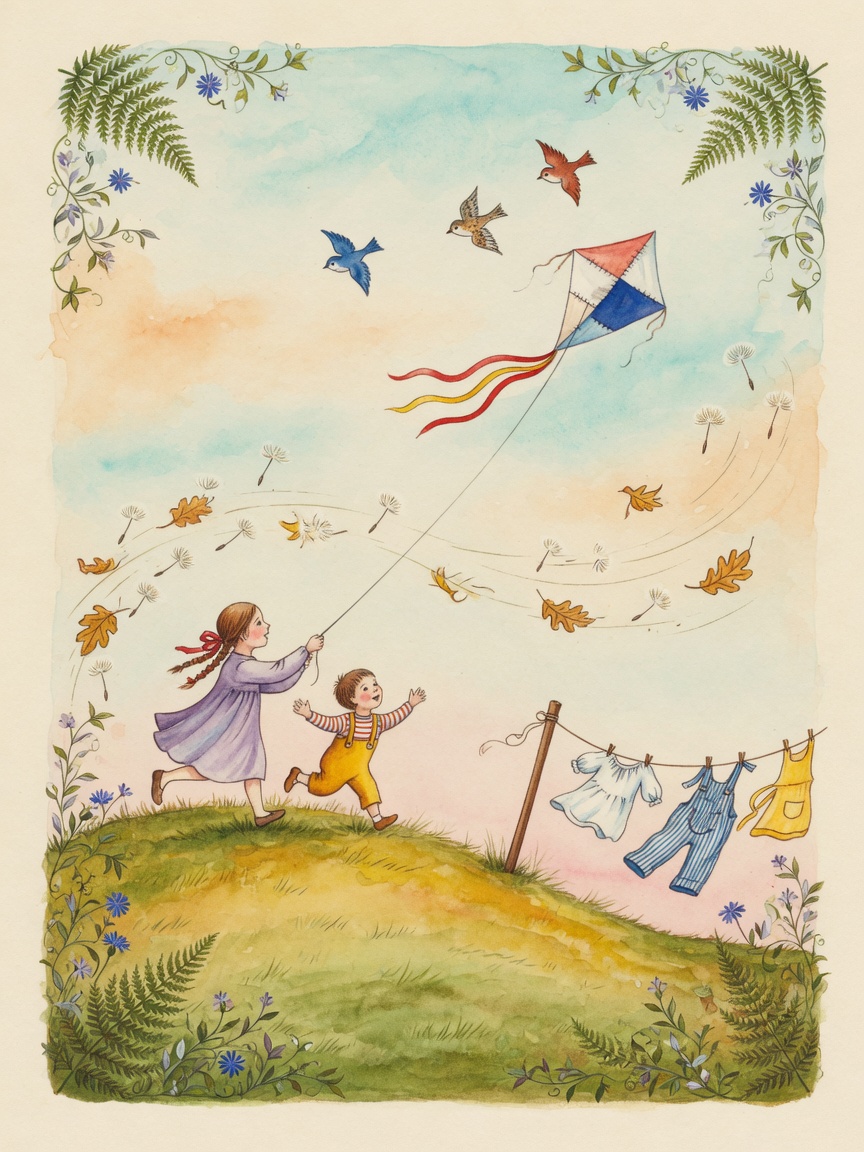
Wind Is Moving Air

We cannot see air itself, but we can see and feel what moving air does.

Open the lesson

Tiny story

Wind had no color and no feet, yet the grasses bowed when it passed. A ribbon lifted and showed the child exactly where Wind was going.

Discover

  1. Carry ribbon, yarn, a feather, and a leaf outside. Which moves first? Which moves farthest?
  2. Make a windsock from a paper tube and cloth ribbons. Hang it where an adult can observe it safely.
  3. Find a sheltered place and a breezy place. Compare how each feels.

Move & make

Begin as still air, sway as a breeze, sweep as a strong wind, then become still again. Paint long flowing strokes in pale blue, sage, and gold.

Weather words: air, breeze, gust, still, direction.

Watercolor discovery scene with water
Lesson 4

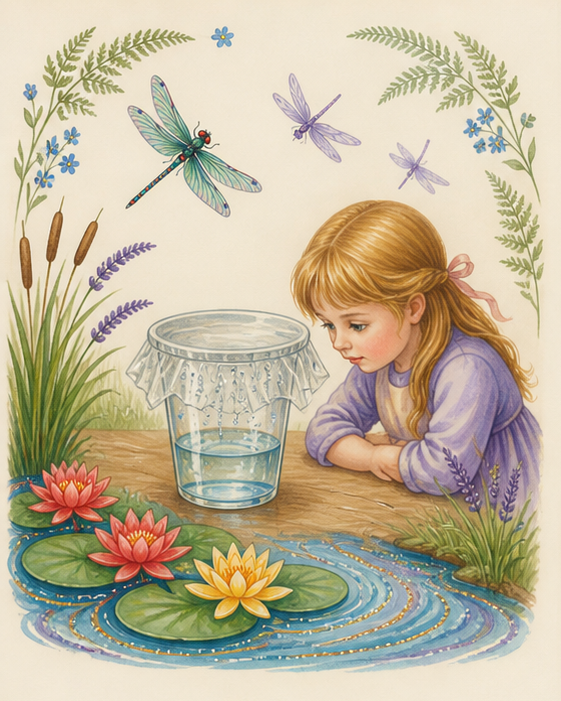
Rain Falls and Gathers

When cloud droplets grow heavy enough, water falls and gathers on the land.

Open the lesson

Tiny story

The cloud carried more and more little drops until it could carry no more. Down they came—on the roof, into the garden, along the path, and home to the stream.

Discover

  1. Set a straight-sided clear jar outside in an open place before rain. Afterward, compare the water depth with a ruler while an adult records it.
  2. Pour water over a tray shaped with a hill, valley, and little channel. Watch where it runs and gathers.
  3. Test what keeps a toy dry: paper, cloth, leaf, waxed paper, or foil.

Move & make

Tap one finger for drizzle, many fingers for rain, and both hands softly for a downpour. Paint wet-on-wet blue and violet, then draw white wax raindrops before another wash.

Weather words: drizzle, shower, downpour, puddle, rain gauge.

Summer watercolor illustration with a bright sky
Lesson 5

Thunder, Lightning & Staying Safe

Lightning is a powerful electrical spark; thunder is the sound made as heated air expands.

Open the lesson

Tiny story

A bright line flashed inside the far cloud. The family went indoors, away from windows. Then came the great sky-rumble. Safe together, they counted until the storm moved on.

Learn the family rule

  1. When thunder can be heard, go inside a substantial building or hard-topped car.
  2. Stay away from windows, porches, open fields, tall isolated trees, water, plumbing, and corded electrical equipment.
  3. Wait at least 30 minutes after the last thunder before returning outdoors.
  4. Practice the route indoors on a clear day so storm safety feels calm and familiar.

Move & make

Flash fingers silently like lightning; wait; then pat knees for thunder. Build a cozy indoor storm basket with a blanket, quiet book, flashlight, and simple toy.

Weather words: lightning, thunder, flash, storm, shelter.

Winter watercolor illustration with snow and frost
Lesson 6

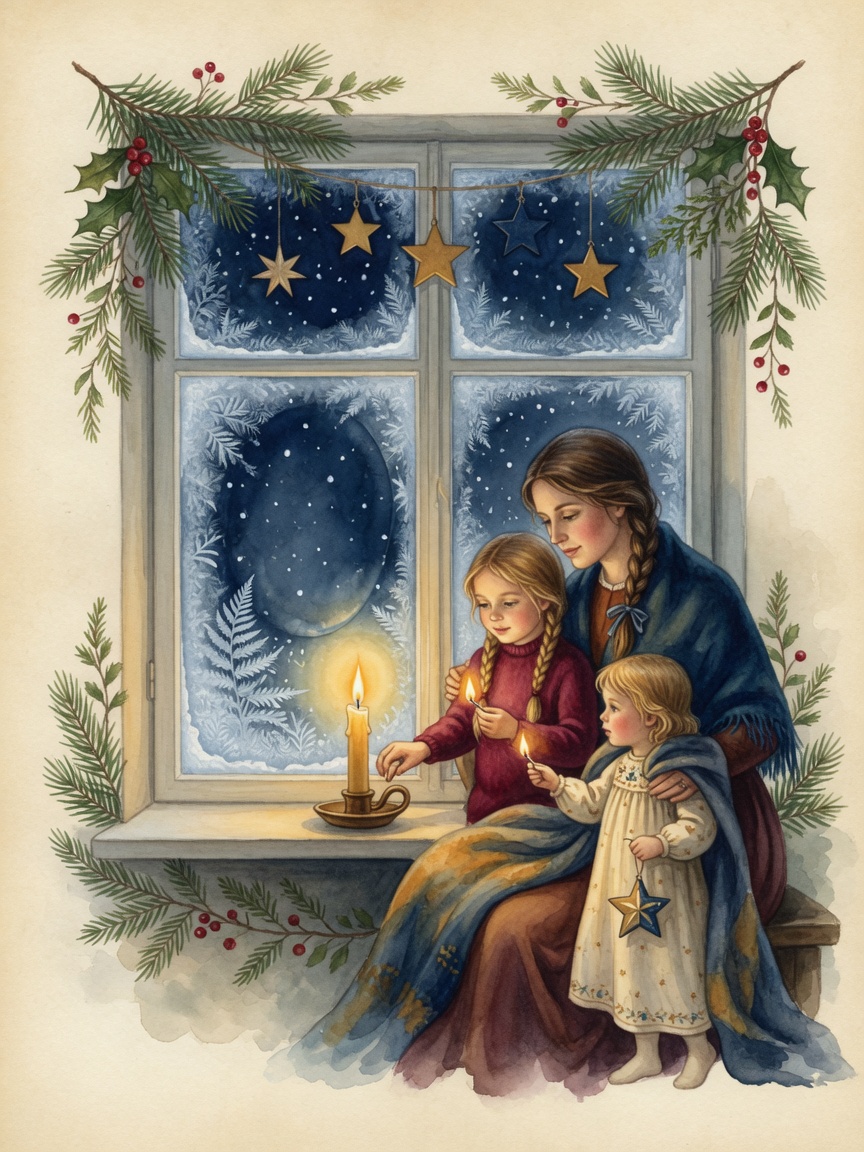
Snow, Frost & Ice

Water changes form when the air and surfaces become cold enough.

Open the lesson

Tiny story

Night cooled the garden until each blade of grass wore a silver edge. In the clouds, tiny ice crystals joined into snowflakes and floated down without a sound.

Discover

  1. Freeze water in three containers of different shapes. Notice that water becomes solid but keeps the shape of its container.
  2. Bring one ice cube indoors and place another in a cooler spot. Which melts first?
  3. On a cold morning, look for frost on grass, roofs, and leaves without licking or handling unknown surfaces.

Move & make

Twirl as a snowflake, land softly, then melt slowly into the earth. Paint pale blue over white wax snow crystals; sprinkle a few grains of salt into the wet wash for texture.

Weather words: freeze, melt, frost, ice crystal, snowflake.

Watercolor nature basket for daily weather observation
Lesson 7

Become a Weather Watcher

Scientists observe the same things regularly, record what they find, and compare change over time.

Open the lesson

Make a weather station

Gather a journal, crayons, outdoor thermometer, rain jar, windsock, and a simple cardboard weather wheel with removable pictures for sunny, cloudy, windy, rainy, stormy, snowy, hot, warm, cool, and cold.

One-minute watch

  1. Look up: What covers most of the sky?
  2. Feel: Is the air warm, cool, still, or moving?
  3. Notice: Is anything falling from the sky?
  4. Check one tool: thermometer, rain jar, or windsock.
  5. Record one picture, color, word, or parent-written sentence.

Ask on day seven

Which kind of weather came most? What changed? What stayed the same? What evidence helped us know?

Weather words: observe, record, compare, temperature, forecast.

Seven-Day Weather Journal

One page, one week

Divide a sheet of paper into seven boxes. Each day, add:

  1. one sky picture: sunny, cloudy, rainy, stormy, or snowy;
  2. one wind mark: still, breeze, or strong wind;
  3. one feeling word: hot, warm, cool, or cold;
  4. one thing noticed: a shadow, puddle, frost, moving branch, dark cloud, or rainbow.

At the bottom write, This week we noticed… and let the child dictate the ending.

Continue the sky study

Where Rain and Sun Meet

After rain and sunlight, continue into the full companion lesson: why rainbows appear, how white light opens into color, and how to make a rainbow safely at home.

Begin the Rainbow Lesson

Closing Verse

Sun or cloud, wind, frost, or rain,
The sky will always change again.
I watched with care; I came to know
The signs above, around, below.